




Key Takeaways
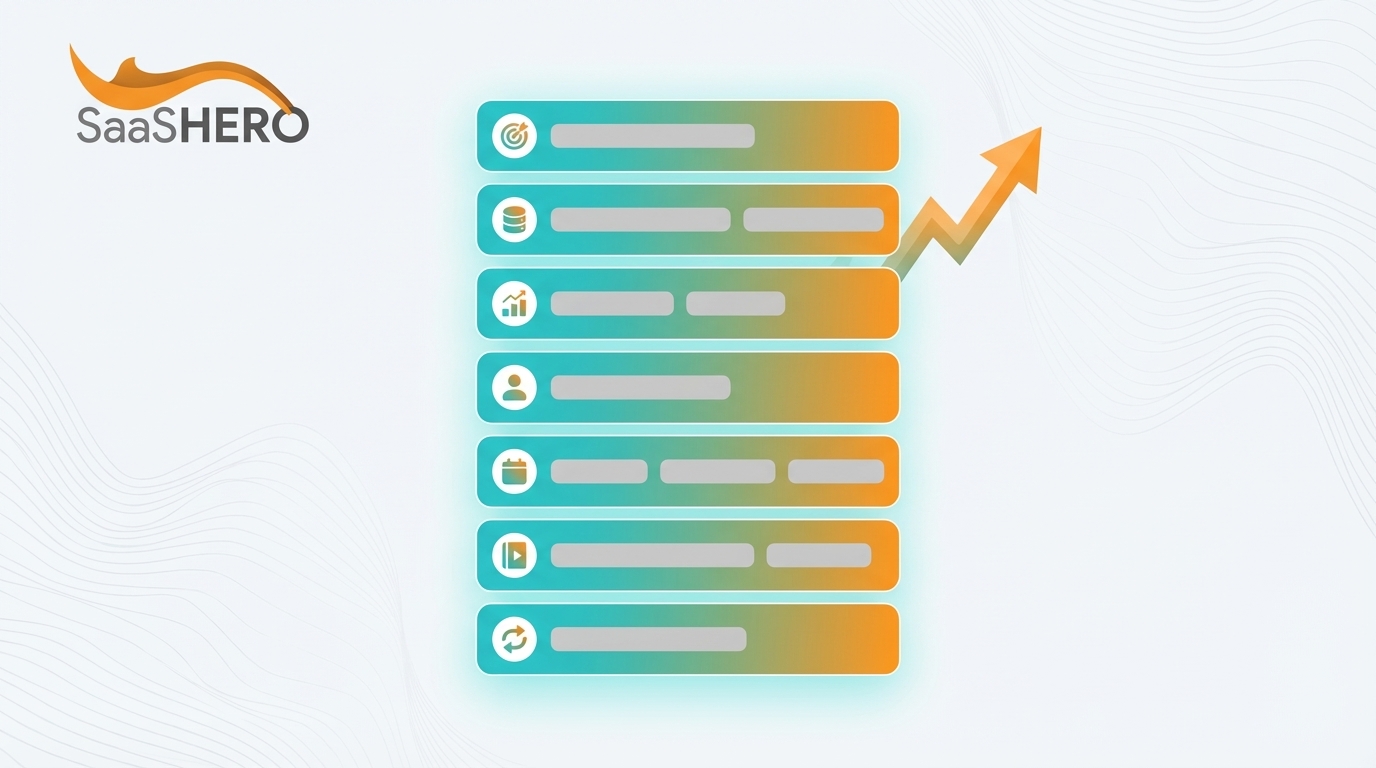
- Siloed GTM teams leak 30-50% of ad spend, and the 7-Layer Stack unifies ICP, KPIs, and execution for roughly 20% revenue growth.
- Layer 1 True North ICP removes persona chaos and focuses every team on revenue-driving buyers with weekly reviews.
- A shared CRM dashboard and revenue KPIs like Magic Number >0.75 end data wars and connect spend to Net New ARR.
- RevOps structure, aligned cadences, conquest playbooks, and win/loss loops create a self-improving revenue system.
- SaaSHero delivers results like $504k ARR for TripMaster, so schedule a discovery call to build your stack.
Layer 1: True North ICP for Revenue-Focused Targeting
The foundation of GTM alignment starts with a single, unified Ideal Customer Profile that replaces the chaos of competing personas. 34% of product-market fit failures stem from wrong ICP targeting, so this layer drives everything that follows.
Your ICP must be revenue-focused, not demographic-focused. Build profiles around job titles that control budget, pain points that drive urgency, and ACV thresholds that justify your sales cycle. Run weekly ICP review cadences to prevent drift. Q1 success metrics often become Q2 failures when teams stop revisiting who actually buys and renews.
Start by deploying competitor conquest keywords to capture ICP data from high-intent searches. Use this data to document specific job titles, company size, and pain triggers that convert. Then establish weekly cross-team ICP validation meetings so marketing, sales, and success stay aligned on the same buyer.
SaaSHero’s HubSpot ICP tracking system helped TestGorilla maintain laser focus during their Series A growth. Every marketing dollar targeted decision-makers with budget authority instead of broad persona guesses.
Layer 2: Single Source of Truth for ICP and Pipeline Data
Once you have a unified ICP, every team needs to work from the same data about those prospects. Data wars between marketing and sales kill alignment faster than bad leads. A unified dashboard in HubSpot or Looker Studio becomes your command center and ends the “my numbers vs. your numbers” debate.
Companies with aligned teams using shared metrics achieve 20% revenue growth because everyone operates from identical data. Your dashboard should track GCLID-to-CRM attribution, real-time pipeline visualization, and daily access rituals that make data consumption a habit instead of a chore.
Build your dashboard around three critical components. First, set up GCLID-to-CRM sync for complete attribution tracking from click to closed-won. Second, provide real-time pipeline visualization that every GTM team can access without gatekeeping. Third, create daily dashboard check-ins as part of team rituals so decisions always reflect current numbers.
SaaSHero’s integrated tracking system for Playvox delivered a 10x reduction in Cost Per Lead. The team closed attribution gaps and shifted spend based on closed-won data instead of surface-level clicks.
Layer 3: Shared Revenue KPIs That Replace Vanity Metrics
Revenue-focused KPIs keep teams accountable and remove the finger-pointing that destroys cohesion. Vanity metrics like impressions and CTR distract leaders from the only outcomes that matter, which are revenue, payback, and win rates.
The following table shows three critical KPIs that should replace vanity metrics, along with target benchmarks and review frequencies:
| KPI | Target | Review Cadence |
|---|---|---|
| Net New ARR | 80-day payback | Weekly |
| SQLs | 25-40% win rate | Bi-weekly |
| Magic Number | >0.75 | Monthly |
The Magic Number, defined as Net New ARR divided by previous quarter’s sales and marketing spend, becomes your north star. A value above 0.75 indicates efficient growth. A value below 0.5 signals misalignment that needs immediate action from marketing, sales, and RevOps.
SaaSHero shifted TripMaster from impression-based reporting to Net New ARR tracking. That change produced $504k in additional revenue because campaigns were tuned for closed-won outcomes instead of top-of-funnel volume.

Layer 4: Senior-Led RevOps Structure That Owns the Funnel
A strong RevOps structure removes silos by centralizing GTM operations under unified leadership. 75% of highest-growth companies will adopt RevOps by 2026 because this model creates accountability across the entire revenue cycle.
To build an effective RevOps structure, use these role ratios and reporting relationships as your blueprint:
| Role | Ratio | Reports To | Primary Tool |
|---|---|---|---|
| VP RevOps | 1:8 managers | CRO | HubSpot |
| RevOps Analyst | 1:15 reps | VP RevOps | Looker Studio |
| Systems Admin | 1:20 users | VP RevOps | Salesforce |
Your RevOps structure should include monthly revenue meetings with department heads, shared KPI ownership, and clear cross-functional process documentation. Senior leaders must own execution. Strategic accounts cannot sit with junior account managers who lack authority to change direction.
SaaSHero maintains a maximum 8:1 client-to-manager ratio. This structure keeps senior-level strategic oversight on every account instead of the 30+ client loads that overwhelm traditional agencies.

Layer 5: Execution Cadences That Keep Teams in Sync
Aligned execution cadences prevent the Q1 drift that kills most GTM strategies after early wins. GTM alignment produces roughly 19% faster revenue growth when teams maintain consistent communication rhythms across channels.
Implement three non-negotiable cadences that connect daily work to revenue goals. Use weekly Slack channels for SQL handoffs and pipeline updates so sales and marketing stay synchronized. Run bi-weekly strategy sessions to refine playbooks based on current performance. Hold monthly RevOps reviews that include AI-powered forecasting adjustments and cross-team decisions.
SaaSHero embeds directly into client Slack channels and participates in these rhythms. This approach creates real-time alignment and prevents the communication gaps that usually appear after the second month of an agency relationship.
Layer 6: Conquest Playbooks and High-Intent Landing Pages
Standardized playbooks turn your cadences into consistent execution across campaigns and channels. Intent-based landing pages then capture high-converting traffic that generic home pages miss. Competitor conquest campaigns that target pricing and complaint keywords often deliver 40% shorter sales cycles because they intercept buyers in evaluation mode.
Build dedicated pages that address different stages of competitor evaluation. Start with competitor pricing comparison pages that include clear TCO calculations, which help prospects justify switching costs. Create alternative solution pages that speak directly to specific competitor weaknesses your prospects experience. Add review aggregation pages with G2 and Capterra social proof so third-party validation supports your claims.

Apply strict negative keyword hygiene so you avoid wasted spend on navigational searches. Focus on evaluative modifiers like “pricing,” “alternatives,” and “vs” to capture decision-ready prospects who already compare options.
SaaSHero’s competitor conquest framework played a key role in TestGorilla’s rapid scale. The team captured market share from established players through precise keyword targeting and conversion-focused landing pages that matched buyer intent.
Layer 7: Win/Loss Feedback Loops That Refine Every Layer
Structured win/loss analysis closes the loop between sales outcomes and marketing strategy. Companies with strong feedback loops achieve 38% higher win rates because they keep refining ICP, messaging, and offers based on real deals.
Document why deals close and why they stall or die. Feed these insights back into Layer 1 for ICP refinement and into Layer 3 for KPI tuning and target resets. Over time, this feedback turns your GTM stack into a self-improving system that compounds efficiency and win rates.
SaaSHero’s feedback loop implementation for Playvox surfaced specific competitor weaknesses that became core messaging pillars. These insights supported the earlier 10x CPL improvement by sharpening targeting and positioning.
Ready to implement your 7-layer stack? SaaSHero builds complete GTM alignment systems starting at $1,250/month with month-to-month flexibility. Book a discovery call to get started.
5 Common GTM Alignment Pitfalls and How to Fix Them
Even with the 7-layer framework, specific pitfalls can still derail GTM alignment. These issues often appear together when teams lose focus on revenue and structure.
- Post-Q1 Drift: Initial success creates complacency and weakens execution. Fix this with monthly ritual reviews of all seven layers and documented adjustments that reset priorities.
- Vanity Metric Addiction: Teams celebrate impressions while revenue softens. Fix this by using SaaSHero’s revenue-first tracking, which delivers the growth outcomes mentioned earlier and avoids the 4% decline that hits misaligned teams.
- ICP Fragmentation: Different teams chase different personas and confuse the market. Fix this with weekly competitor conquest data reviews that validate a single, unified ICP.
- Siloed Communication: Monthly reports replace real-time collaboration and slow reactions. Fix this with daily Slack integration and weekly cross-team syncs that keep everyone on the same page.
- Weak RevOps Structure: Junior staff manage senior accounts without authority. Fix this by maintaining 1:15 ratios under CRO leadership and enforcing senior-led execution for strategic decisions.
SaaSHero’s flat-fee, month-to-month model removes incentive misalignment that often creates these pitfalls. Recommendations stay tied to performance data instead of fee expansion.
FAQ
What’s the fastest GTM alignment win for SaaS teams?
Unified ICP definition delivers the fastest impact. Many companies see 3x conversion improvements within 30 days after they remove competing personas and focus every team on the same buyer profile. Start with competitor conquest keyword data to identify your highest-converting prospects, then build unified messaging around their specific pain points and buying triggers.
How does SaaSHero implement the 7-layer GTM alignment stack?
SaaSHero embeds as an extension of your team with dedicated Slack integration, HubSpot CRM setup, and weekly alignment calls. Engagements start at $1,250/month with month-to-month flexibility and include landing page improvements, competitor conquest campaigns, and revenue-focused reporting that tracks Net New ARR instead of vanity metrics.
What metrics indicate successful GTM alignment?
Primary success metrics include 80-day CAC payback periods, Net New ARR growth, and a Magic Number above 0.75. Secondary indicators include MQL-to-SQL conversion rates above 25%, shorter sales cycles, and unified pipeline visibility across all teams. Track these metrics weekly and adjust strategy every two weeks.
How long does GTM alignment take for $1-10M ARR SaaS companies?
Initial alignment usually requires 30-90 days, depending on your current systems. Layer 1 and Layer 2, which cover ICP and dashboards, often go live within 30 days. Layers 3 through 5, which include KPIs, RevOps, and cadences, need about 60 days for full adoption. Layers 6 and 7, which cover playbooks and feedback loops, mature over 90 days as you apply insights from closed-won data.
Deploy the 7-Layer GTM Alignment Stack Now
The 7-Layer GTM Alignment Stack turns siloed teams into a coordinated revenue engine. Companies that implement this framework see faster growth, 80-day payback periods, and durable ARR expansion that attracts investors and supports category leadership.
Misaligned teams leak 30-50% of potential revenue, so delay carries a real cost. The framework exists, the tools already sit in your stack, and the results are proven. SaaSHero has operationalized this system for companies from $1M to $10M ARR, delivering outcomes like $504k Net New ARR and $70M funding rounds.
Get your custom GTM alignment audit and implementation roadmap. Book a discovery call to deploy your 7-layer stack within 30 days.