




Key Takeaways
- B2B SaaS faces $2 CAC per $1 ARR in 2026, so revenue-focused tracking must counter privacy data loss and connect clicks to closed-won deals.
- Follow a 7-step framework: UTM and server-side tracking, platform configs, CRM sync, multi-touch attribution, revenue metrics, dashboards, and ongoing optimization.
- Rely on server-side tracking for about 95% accuracy, use time-decay models for B2B cycles, and target ROAS above 4x with CAC payback under 90 days.
- Build automated dashboards that blend ad spend, pipeline velocity, and revenue data so teams can make real-time decisions together.
- Ready to pursue 650% ROI like SaaSHero clients? Book a discovery call for expert implementation.
What You Need Before You Start
Set up revenue-focused tracking only after you confirm admin access to Google Analytics 4, your CRM (HubSpot or Salesforce), and your ad platforms. Make sure you understand basic UTM parameters and attribution concepts. Plan for 1 to 2 weeks of focused implementation time.
Use GA4 for web analytics, server-side tracking capabilities, dashboard tools like Looker Studio or Cometly, and strong CRM integrations. Without reliable CRM synchronization, you stay stuck with vanity metrics that fail to explain revenue growth.
|
Metric |
Definition |
2026 Target |
|
CAC |
Ad spend divided by new customers |
<$2 per ARR dollar |
|
ROAS |
Revenue divided by ad spend |
>4x |
|
Cost per SQL |
Spend divided by sales qualified leads |
$50-150 |
|
Pipeline Velocity |
Time from SQL to closed-won |
<90 days |
Seven-Part Revenue Tracking Framework
The tracking framework uses seven connected steps that build on each other in a clear sequence.
- Establish UTM parameter structure and server-side tracking infrastructure
- Configure platform-specific tracking for Google Ads and LinkedIn
- Synchronize advertising data with CRM systems
- Implement multi-touch attribution models for B2B sales cycles
- Define and track revenue-focused metrics
- Build automated dashboards for real-time performance monitoring
- Optimize campaigns based on pipeline and revenue data
This structured approach lets you trace every advertising dollar from first click to closed-won ARR. You gain the data you need for confident budget allocation and campaign decisions.

Step 1: UTM Structure and Server-Side Tracking Setup
UTM parameters create the base layer for campaign attribution. Use a consistent naming convention such as ?utm_source=linkedin&utm_medium=cpc&utm_campaign=competitor_pricing&utm_content=ad_variant_1&utm_term=salesforce_alternative. Keep capitalization consistent and avoid spaces so tracking does not break.
Server-side tracking now plays a central role in a privacy-first environment. Server-side tracking achieves 95% data accuracy versus 60-80% for client-side implementations, and Meta’s Conversions API often delivers 13% lower cost per result and 19% more attributed events.
Configure a Google Tag Manager server-side container to capture first-party data before ad blockers or privacy settings remove it. This setup helps GCLID parameters and conversion events reach your analytics platforms even when client-side tracking fails.
Step 2: Tracking Setup for Google Ads and LinkedIn
Google Ads tracking starts with auto-tagging so the platform appends GCLID parameters automatically. Configure enhanced conversions with hashed customer data to improve match quality. Add offline conversion imports so CRM data flows back into Google Ads for smarter bidding.
LinkedIn Ads needs manual UTM tags because auto-tagging does not exist there. Use LinkedIn’s Insight Tag with Conversions API to track form submissions and demo requests. Configure lead gen forms to sync directly with your CRM through LinkedIn’s native integrations.
Both platforms gain accuracy when you implement their server-side APIs. Tools like Cometly, Elevar, and Stape provide comprehensive server-side tracking solutions that keep attribution stable despite cookie limits.
Step 3: Connect Ad Platforms to Your CRM
CRM integration turns ad platforms from cost centers into measurable revenue engines. Configure HubSpot’s ads tool to import campaign data automatically and attach it to contact records. For Salesforce, use native connectors or tools like Zapier to sync lead source and campaign data.
Map advertising touchpoints to CRM lifecycle stages: Visitor → Lead → Marketing Qualified Lead → Sales Qualified Lead → Customer. This mapping lets you track conversion rates and speed at each funnel stage so you can improve more than just top-of-funnel metrics.
If CRM integrations feel overwhelming, book a discovery call to review how SaaSHero built seamless tracking for TestGorilla. That work supported an 80-day payback period and helped fuel their $70M Series A raise.
Step 4: Multi-Touch Attribution for B2B Journeys
B2B SaaS sales cycles involve many stakeholders and touchpoints, so last-click attribution rarely tells the full story. Time-decay attribution proves most effective for B2B SaaS with long sales cycles, because it gives more credit to touchpoints close to conversion while still recognizing earlier influence.
Position-based, or U-shaped, attribution works well when discovery and decision phases appear clearly. This model assigns 40% credit to first touch, 40% to last touch, and 20% to middle interactions. Complex enterprise sales often need custom models that weight touchpoints based on their correlation with closed deals.
|
Attribution Model |
Best For |
Credit Distribution |
|
Time-Decay |
Long B2B cycles |
More weight to recent touches |
|
Position-Based |
Clear discovery/decision phases |
40% first, 40% last, 20% middle |
|
Custom |
Complex enterprise sales |
Data-driven weighting |
Step 5: Revenue Metrics That Replace Vanity Stats
Shift focus from impressions and CTR to metrics that connect directly to revenue. Track cost per SQL, pipeline velocity, and customer acquisition cost by channel. Monitor ROAS based on closed-won revenue instead of only pipeline value.
Use cohort analysis to see how channels perform over time. A channel with higher upfront CAC can still win if it delivers stronger lifetime value, which can justify higher bids even when short-term metrics look expensive.
|
Metric |
2026 Benchmark |
SaaSHero Case Study |
|
ROAS |
4-6x |
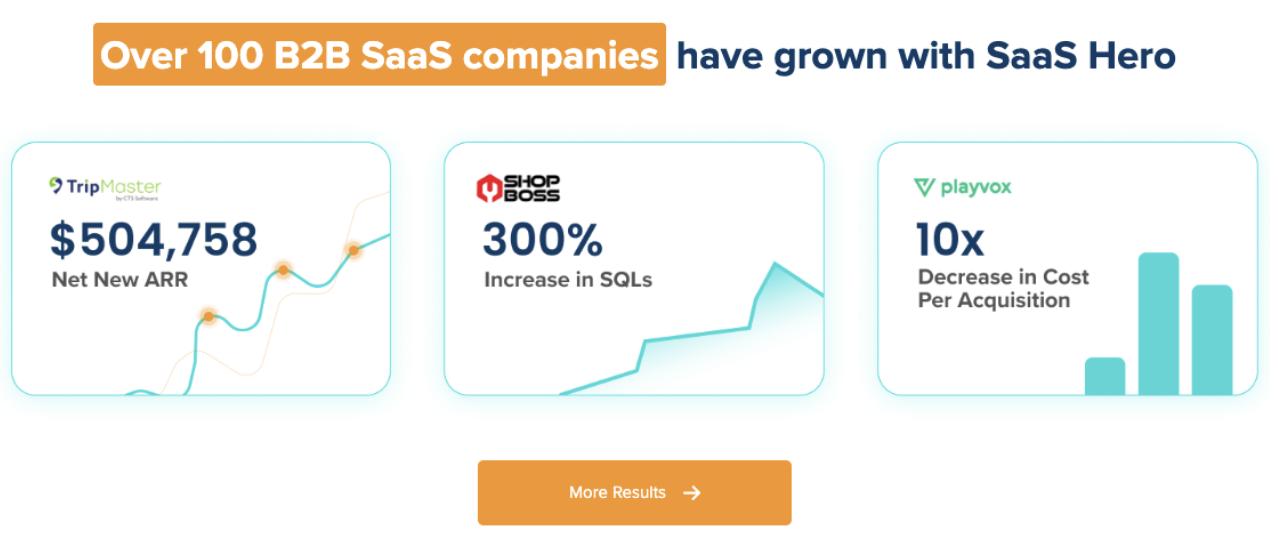
650% for TripMaster |
|
Cost per SQL |
$50-150 |
10x reduction for Playvox |
|
CAC Payback |
<90 days |
80 days for TestGorilla |

Step 6: Real-Time Revenue Dashboards
Automated dashboards should connect ad spend to pipeline and revenue outcomes in real time. Tools like Zoho Analytics offer drag-and-drop builders with SQL support for blending multiple datasets, while Improvado provides pre-built connectors for marketing platforms with AI-powered dashboard creation.
Design each dashboard around a specific decision flow. Marketing teams need campaign-level ROAS and cost per SQL. Sales teams need lead quality scores and conversion rates by source. Executives need CAC trends, payback periods, and revenue attribution by channel.
Set automated alerts for key thresholds such as ROAS below 3x, cost per SQL above $200, or pipeline velocity slower than 120 days. These alerts help you catch waste early and act on optimization opportunities quickly.
Step 7: Revenue-Driven Campaign Optimization
Use revenue attribution data to shift budgets toward campaigns and audiences that create customers, not just clicks. Identify which competitor keywords bring in closed-won deals instead of empty traffic. Improve landing pages for conversion rates that factor in customer lifetime value, not only lead volume.
Build negative keyword lists that remove navigational searches that drain budget. A user who searches only “Salesforce” likely wants the login page, not a competitor comparison. Focus spend on high-intent modifiers such as “pricing,” “alternatives,” and “vs [your company].”
Scale winning campaigns gradually while you watch efficiency metrics. Large, sudden budget jumps often reduce ROAS as you move beyond high-intent audiences into less qualified segments.
Measurement Checks and Ongoing Validation
Validate tracking accuracy by comparing GA4 session counts with CRM lead volumes. Aim for match rates above 80% between analytics and CRM data. Large gaps signal tracking issues that weaken your optimization work.
Review key indicators weekly. ROAS above 3x signals profitable campaigns, cost per SQL under $150 suggests efficient targeting, and payback periods under 90 days show healthy unit economics. Monthly reviews should evaluate attribution model performance and cross-channel interactions.
|
Validation Metric |
Target Range |
|
GA4-CRM Match Rate |
>80% |
|
ROAS |
4-6x |
|
CAC Payback Period |
<90 days |
Advanced Tracking Options for Scaling Teams
Mature setups often add server-side Google Tag Manager for stronger privacy compliance and AI-driven bid strategies based on lifetime value predictions. Many teams also test tools like Cometly or HockeyStack for advanced multi-touch attribution across complex B2B journeys.
Enterprise companies gain extra value from account-based marketing tracking that rolls individual stakeholder activity into one account timeline. This view creates clearer attribution for deals with many decision-makers and long evaluations.
If you want to scale tracking without adding internal complexity, book a discovery call to review SaaSHero’s flat-fee retainer model, which starts at $1,250 monthly and avoids long-term contracts.
Summary and Practical Next Steps
Revenue-focused paid media tracking relies on seven core areas: UTM infrastructure, platform configuration, CRM integration, attribution modeling, revenue metrics, dashboard creation, and optimization workflows. Together, these pieces turn advertising into a measurable revenue driver.
Begin with a tracking audit that highlights current gaps, then prioritize server-side implementation for privacy compliance and data quality. Connect your highest-volume campaigns to CRM data first, then roll out attribution modeling across all active channels.
Frequently Asked Questions
How long does full B2B SaaS tracking setup take?
Most teams need 1 to 2 weeks for the core setup, then another 2 to 4 weeks for advanced attribution and dashboards. Timelines depend on current tracking maturity, CRM complexity, and team capacity. Companies that already use GA4 and CRM integrations usually move faster than teams starting from zero.
Which team roles support successful tracking?
Strong tracking requires coordination between marketing operations, sales operations, and technical teams. Marketing ops manages campaign setup and UTM structure. Sales ops manages CRM configuration and lead routing. Technical teams handle server-side tracking and API integrations. Smaller companies often bring in outside specialists to cover missing skills.
Can smaller B2B SaaS teams use this framework?
Smaller B2B SaaS teams can apply this framework without enterprise tools. HubSpot’s free CRM covers basic attribution needs, and Google Analytics 4 with Looker Studio delivers powerful analytics at no cost. Start with native integrations, then add premium attribution tools as the company grows.
What risks affect B2B SaaS tracking projects?
Major risks include data silos between platforms, attribution gaps from privacy rules, and heavy reliance on last-click models that undervalue awareness efforts. Technical risks include tracking breaks from site changes, CRM sync failures, and GDPR compliance issues. Experienced partners help reduce these risks through proven frameworks and continuous monitoring.
How often should teams review their tracking setup?
Run weekly reviews that focus on campaign performance and key revenue metrics. Add monthly deep dives into attribution accuracy and cross-channel behavior. Conduct quarterly audits of tracking infrastructure and CRM data quality. Use annual reviews to upgrade tools, refine processes, and align tracking with new business goals.
Turn paid media from a cost line into a revenue engine with a clear tracking methodology. Book a discovery call to work with SaaSHero’s revenue-first team, backed by transparent month-to-month engagements without agency bloat or long-term contracts.