




Key Takeaways
- Siloed sales and marketing teams cause 30-50% lead drop-off and inflated CAC, so alignment becomes essential for 2026 SaaS growth.
- The 10-step framework delivers 2x SQL generation, 20% pipeline velocity gains, and 80-day CAC payback through shared ICP, KPIs, and connected tools.
- Weekly syncs, AI lead scoring, and unified dashboards create tight feedback loops and revenue-focused collaboration across both teams.
- Real results include $500K+ net new ARR for TripMaster and an 80-day payback that helped TestGorilla secure its $70M Series A.
- Partner with SaaSHero to deploy this framework and turn your go-to-market motion into a predictable revenue engine.
Why SaaS Sales and Marketing Drift Out of Alignment
B2B SaaS alignment failures start with structural gaps between teams. Dark funnel attribution hides large parts of the buyer journey across channels and devices. MQL-to-SQL conversion rates drop when marketing chases volume without sales input on what a qualified lead actually looks like. Long sales cycles complicate tracking as customers are 57% through purchase decisions before sales contact.
To overcome these structural barriers, the 2026 SaaS alignment framework focuses on four pillars: shared ICP and KPIs, systematic feedback loops, integrated technology, and revenue-focused metrics. Teams shift attention away from vanity metrics like raw MQL counts and toward pipeline velocity and closed-won revenue.
| KPI | Target | SaaS Impact |
|---|---|---|
| Pipeline Velocity | 20%+ lift | Faster deal cycles via unified data |
| Net New ARR | $500K+ | Growth compared to siloed operations |
| CAC Payback | <90 days | Capital efficiency similar to TestGorilla |
These targets become increasingly achievable as 2026 trends amplify alignment opportunities. AI agents now autonomously handle lead scoring via buyer intent signals, while integrated tech stacks provide real-time pipeline visibility. SaaSHero’s Google-to-CRM tracking illustrates this shift by connecting ad clicks directly to closed revenue.

The 10-Step 2026 SaaS Alignment Framework
1. Jointly Define ICP and Buyer Journey
Alignment starts with collaborative ICP workshops that include both sales and marketing leaders. Teams use intent data from pricing page visits, competitor comparison searches, and review site engagement to flag high-conversion prospects. This data becomes actionable when sales adds win and loss insights that confirm which behaviors predict closed deals, while marketing contributes engagement patterns that signal buying readiness. Without this cross-functional validation, personas stay vague and never translate into clear targeting criteria.
2. Agree on Shared Revenue KPIs
Teams need joint metrics that focus on pipeline contribution and conversion efficiency. Target MQL-to-SQL conversion rates of 45% and pipeline contribution of 60% from marketing activities. Both teams should receive compensation tied to shared ARR goals instead of isolated function metrics.
3. Create Unified MQL and SQL Criteria
Clear lead qualification standards keep marketing focused on sales-ready prospects. Sales must shape these standards so definitions match real buying behavior. Criteria should move beyond vanity metrics like simple form fills and include engagement thresholds, company fit, and buying stage indicators. Both teams need to agree that these signals represent genuine sales opportunities.
4. Implement Weekly Revenue Sync Cadences
Weekly pipeline reviews keep everyone aligned on current performance. Both teams should attend and review lead quality, campaign impact on SQL targets, and recent closed-won learnings. Use shared Slack channels for quick questions and updates, mirroring SaaSHero’s embedded team approach. Each meeting should end with clear adjustments to campaigns, messaging, or targeting.
5. Integrate Your Revenue Technology Stack
Connected tools give sales and marketing a single view of the customer journey. Link marketing automation platforms with CRM systems so data flows cleanly between them. Implement GCLID-to-revenue tracking that shows the full path from ad click to closed deal. With this visibility, both teams can focus decisions on actual revenue impact instead of proxy metrics.
6. Establish Closed-Loop Lead Feedback
Structured feedback loops turn every lead into a learning opportunity. Create consistent processes for sales to score lead quality and send insights back to marketing. These scores should update daily so marketing can adjust targeting in real time based on which lead traits convert. To make this feedback useful, sales should log specific details about readiness, pain points, and competitive context in the CRM, giving marketing the information needed to refine campaigns.
7. Co-Create Content and ABM Programs
Joint content and ABM programs keep messaging aligned with real buyer needs. Sales contributes account intelligence, common objections, and competitor insights. Marketing turns that input into targeted content, sequences, and account-based campaigns. One SaaS provider achieved a 33% increase in average deal size through shared ABM frameworks, showing the impact of coordinated efforts.
8. Align Incentive Structures with Shared ARR
Compensation needs to reinforce the shared ARR goals defined earlier. Marketing bonuses should include SQL-to-close conversion rates, not just MQL volume. Sales compensation should recognize pipeline sourced by marketing, not only self-generated deals. These mechanics create shared accountability for revenue outcomes instead of isolated team wins.
9. Deploy AI for Smarter Lead Scoring
Modern AI tools improve lead qualification accuracy and speed. 56% of sales professionals now use AI daily and are twice as likely to exceed targets. AI agents can score leads based on intent signals, firmographic data, and engagement patterns, then trigger the right sales actions without manual sorting.
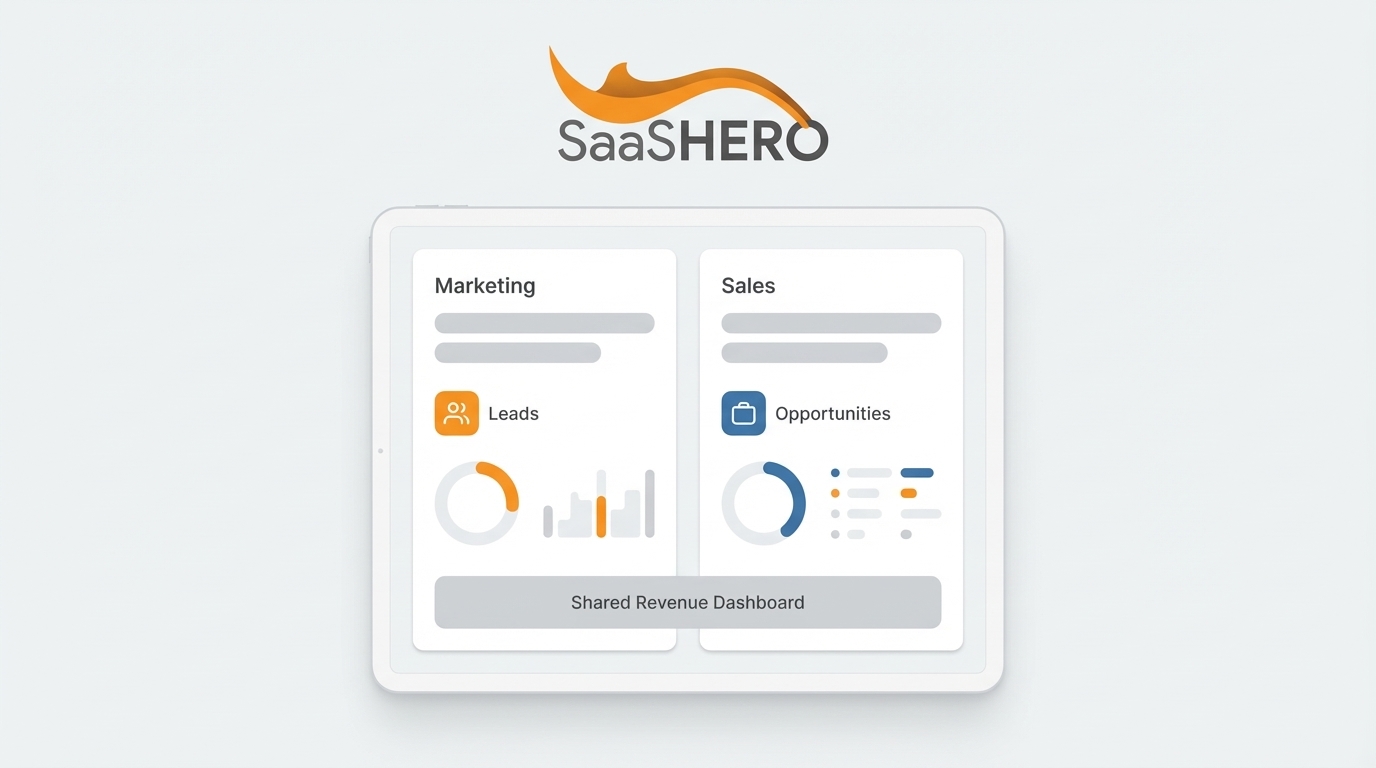
10. Build Shared Revenue Dashboards
Unified dashboards keep everyone focused on the same numbers. Use tools like Looker Studio to show funnel performance from ad spend through to closed revenue. Give both teams real-time visibility into pipeline health, conversion rates, and revenue attribution. Consider flat-fee partnerships like SaaSHero’s model to avoid spend-based conflicts and keep incentives aligned with revenue.
SaaSHero Client Results and Proof Points
Real-world use of this framework delivers measurable revenue gains. TripMaster’s results, mentioned earlier, came from integrated tracking and competitor conquest campaigns that tied ad spend directly to closed ARR. TestGorilla’s payback period, referenced above, demonstrated the capital efficiency that made its Series A attractive to investors. Playvox achieved a 10x decrease in cost per lead through account restructuring and tighter negative keyword controls.

SaaSHero operates as an embedded growth team with senior strategists handling a maximum of 8 to 10 clients each. Month-to-month contracts maintain constant performance pressure and flexibility. Direct integration with client Slack channels and CRM systems creates transparency and collaboration that traditional agencies rarely match. Book a discovery call to explore how this approach could work for your SaaS company.

Measurement, Common Pitfalls, and 2026 Enhancements
Clear success metrics keep alignment efforts grounded in outcomes. Targets often include 20% pipeline velocity improvements and CAC payback periods under 90 days. Companies with strong cross-functional alignment outperform acquisition and revenue targets. Common pitfalls include ignoring negative feedback from sales, celebrating only top-line metrics, and failing to adjust ICP or messaging when data shifts.
Advanced 2026 enhancements combine ABM with AI agents for autonomous prospecting and personalized outreach. These systems can prioritize accounts, tailor messaging, and surface buying signals for both teams. Download our complete alignment playbook with KPI templates, meeting cadences, and implementation checklists to speed up deployment of this framework.
Frequently Asked Questions
How long does it take to align sales and marketing teams?
Most SaaS companies see early alignment gains within 4 to 6 weeks of using this framework. Full integration with measurable pipeline velocity improvements typically appears within 90 days. Teams get the fastest results when they start with shared KPI definitions and weekly sync cadences before layering in advanced AI and automation.
What roles should be involved in the alignment process?
Core stakeholders usually include the CMO or VP of Marketing, the VP of Sales or Sales Director, and RevOps when that function exists. Founder-led companies should involve the CEO during initial framework setup. Individual contributors such as demand generation managers and sales development reps should join weekly syncs and participate actively in feedback loops.
What are the biggest risks for SaaS companies with misaligned teams?
Dark funnel attribution creates blind spots where marketing cannot track real revenue impact. Lead quality declines when sales does not share feedback on MQL criteria. Pipeline forecasting becomes unreliable without shared visibility into campaign performance and lead progression across the sales cycle.
How do you troubleshoot poor lead handoffs between teams?
Service Level Agreements help tighten response times on qualified leads, such as a 2-hour follow-up target. AI lead scoring can automatically prioritize prospects based on engagement and fit so sales focuses on the right accounts first. Shared dashboards should display lead progression from marketing touch to sales qualification and finally to closed-won revenue.
What technology integrations are essential for alignment?
Core integrations connect your CRM, such as HubSpot or Salesforce, with marketing automation platforms for smooth data flow. Tracking should connect ad clicks to closed revenue through GCLID or UTM parameters. Intent data platforms and conversation intelligence tools then share buyer insights between teams in real time.
Transform Your SaaS Growth with Tight Revenue Alignment
The 10-step SaaS alignment framework gives you a clear path to remove revenue silos and accelerate growth. Each step, from joint ICP definition to AI-powered lead scoring, builds toward unified revenue operations that deliver measurable outcomes.
Success depends on shared KPIs, consistent feedback loops, and integrated technology stacks. Companies that commit to this framework often see 2x SQL generation, faster pipeline velocity, and shorter CAC payback periods that support sustainable growth and stronger investor confidence.
Book a discovery call with SaaSHero to roll out this alignment framework with experienced guidance. The senior-led team has generated over $500K in net new ARR for B2B SaaS clients through systematic sales and marketing integration and revenue-focused execution.