




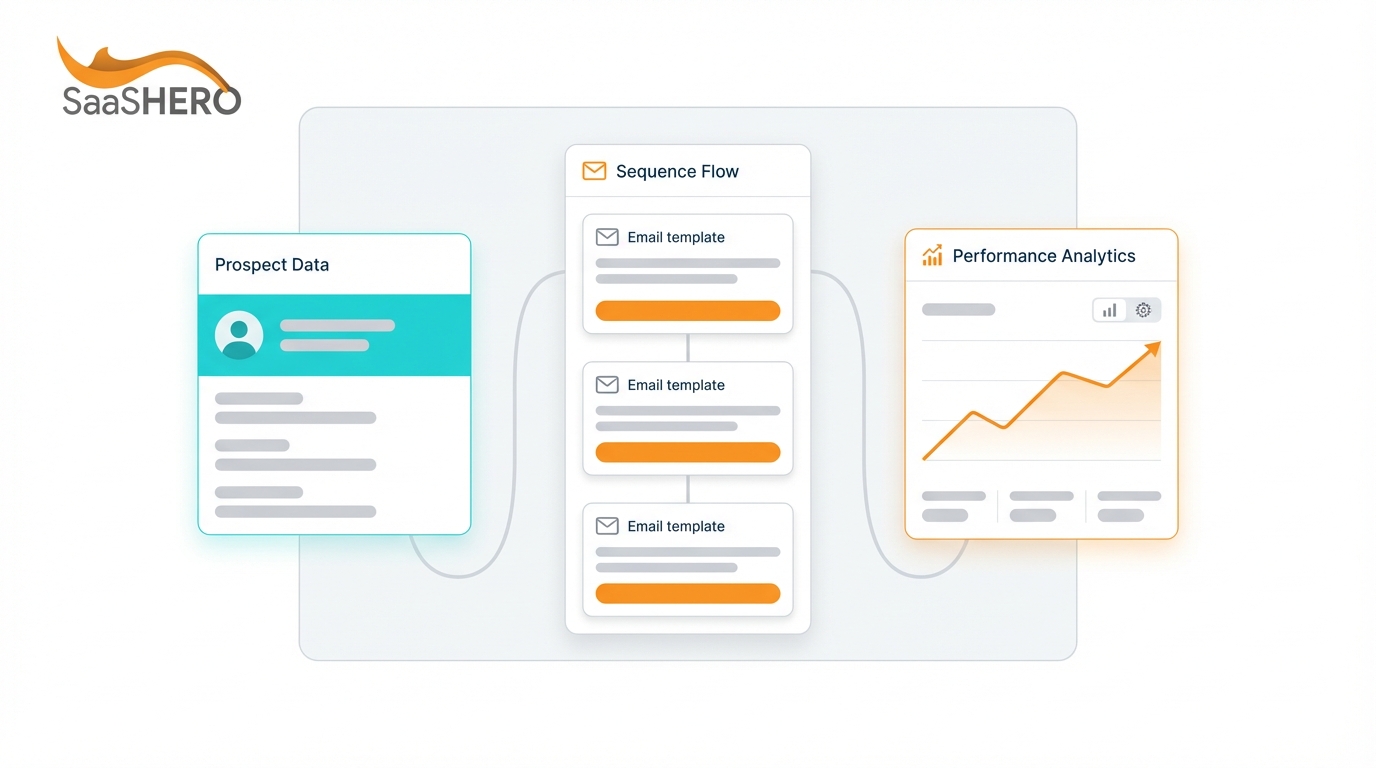
Key Takeaways
- Top B2B lead gen agencies reach 15-30% reply rates with systematic personalization, data enrichment, and multi-channel sequences, far above generic outreach’s 5%.
- Define precise ICPs from CRM analysis of high-LTV customers and mapped buying committees to drive targeted messaging and ARR growth.
- Use 2026 AI tools like Clay.com, GPT-5o, Apollo, and 6sense for data enrichment, intent signals, and at-scale personalization.
- Run multi-channel sequences with behavioral triggers and AI tuning to deliver 5x response rates and roughly 80-day payback periods.
- Track revenue attribution from first touch to Net New ARR; book a discovery call with SaaSHero to implement this playbook and scale SaaS growth.
Core Tools and Setup for SaaS Personalized Outreach
Effective personalized outreach starts with a clear tech stack and strong ICP fundamentals. Core tools include LinkedIn Sales Navigator for prospect research, Apollo or ZoomInfo for data enrichment, HubSpot or Salesforce for CRM, and 2026 AI tools like GPT-5o and Clay.com for scalable personalization. Your Ideal Customer Profile should define firmographics, ARR ranges, churn indicators, and multi-stakeholder buying committees.
The setup window usually runs 4-6 weeks and covers tracking integration, prospect database buildout, and message template creation. This work sits at mid-level difficulty and carries risks such as inauthentic personalization that harms brand perception and potential compliance issues with data privacy rules.
7 Agency Tactics for High-Reply SaaS Outreach
Professional B2B lead generation agencies follow a repeatable outreach system that reliably delivers 15-30% response rates. The seven core tactics are: 1. ICP Definition and Segmentation, 2. Data Enrichment and Prospect Research, 3. Intent Mapping and Behavioral Triggers, 4. Hyper-Personalization at Scale, 5. Multi-Channel Sequence Design, 6. AI-Powered Automation and Optimization, 7. Performance Tracking and Revenue Attribution. This framework replaces spray-and-pray campaigns with targeted programs that match prospect pain points and buying stages.
|
Tactic |
Primary Tool |
Expected Outcome |
|
ICP Definition |
CRM Analysis |
50% better targeting |
|
Data Enrichment |
Apollo/ZoomInfo |
90% contact accuracy |
|
Intent Mapping |
6sense/Bombora |
3x higher conversion |
|
Hyper-Personalization |
Clay.com/GPT-5o |
202% conversion lift |
|
Multi-Channel Sequences |
HubSpot/Outreach |
5x response rates |
|
AI Automation |
Salesforce MCAE |
80% time savings |
|
Revenue Attribution |
Looker Studio |
Clear ROI tracking |
Step 1: Define a Precise SaaS ICP for Outreach
Objective: Set clear targeting criteria that match your highest-value customers and shortest sales cycles to grow ARR.
Actions: Analyze CRM data to find patterns among customers with the highest LTV, lowest churn, and fastest time-to-value. Build firmographic profiles with company size, revenue, industry, tech stack, and growth signals. Map buying committees for each ICP segment and list decision makers, influencers, and end users with their pain points and evaluation criteria.
SaaSHero Example: For HR Tech clients, SaaSHero targets companies with 100-1000 employees and rapid hiring growth. They focus on HR Directors frustrated with manual workflows and CFOs worried about compliance costs. They run separate messaging tracks for each role, highlighting efficiency for HR and ROI for finance leaders.
2026 Tools: Apollo’s advanced filters surface companies with fresh funding or rising job posts as growth indicators. Clay.com pulls multiple data sources into unified prospect profiles and cuts manual research time by about 80%.
Success Metrics: Reach 20%+ reply rates by contacting prospects who match your ICP exactly, instead of 3-5% from broad targeting.
Step 2: Enrich Prospect Data and Research Accounts
Objective: Build rich prospect records with accurate contacts and behavioral context so your team can personalize at scale.
Actions: Data enrichment tools like ZoomInfo, Cognism, Clearbit, and Apollo are central as data quality drives segmentation and personalization in the growing $15B market. Set automated workflows that collect company news, tech changes, hiring trends, and social activity. Maintain dynamic profiles that update in real time as new behavior and intent signals appear.
SaaSHero Example: For procurement software, SaaSHero flags companies posting new procurement roles, which signals expansion and friction with current tools. They enrich profiles with press releases on supply chain issues and executive LinkedIn posts about cost control.
2026 Tools: GPT-5o scans LinkedIn and websites to pull personalization angles automatically. Bombora and 6sense surface intent data that shows which accounts actively research your category, so outreach lands when interest peaks.
Success Metrics: Hold 90%+ contact accuracy and cut research time from 30 minutes per prospect to under 5 minutes through automation.
Step 3: Map Intent and Trigger Timely Outreach
Objective: Reach prospects at the right buying moments to lift response and conversion rates.
Actions: Intent data platforms like 6sense, Demandbase, Bombora, and Intentsify identify high-value accounts using review sites, publishers, and first-party data for prioritization. Configure triggers that launch outreach when prospects visit pricing pages, download competitor content, or engage with niche topics. Build intent scores that weigh multiple signals instead of reacting to single actions.
SaaSHero Example: For cybersecurity SaaS, SaaSHero tracks research around “data breach response” and compliance content, which signals urgent risk. They send fast follow-ups with case studies showing how similar firms avoided breaches using their client’s platform.
2026 Tools: AI intent platforms now send real-time alerts when accounts enter active buying phases, which enables same-day outreach. Advanced attribution models connect intent signals across channels to form complete buyer journey maps.
Success Metrics: 79% of teams report increased revenue from intent-driven outbound compared to timing-agnostic outreach.
Step 4: Run Hyper-Personalization at Scale
Objective: Send messages that feel one-to-one while still supporting hundreds of active sequences.
Actions: Build personalization frameworks that reference concrete company challenges, recent news, mutual connections, and relevant industry trends. AI-powered personalization boosts conversion rates by 202% when used intentionally for high-intent segments in B2B SaaS outbound. Create templates with dynamic fields that pull in prospect-specific details and keep a natural, conversational tone.
Agency Example: Instead of “I noticed your company,” top agencies write, “Saw TechCorp’s recent $10M Series B announcement. With 40% headcount growth planned, your current HR systems might be hitting capacity limits. We helped companies like [client] scale from 200 to 500 employees without adding HR headcount.”
2026 Tools: Clay.com merges data sources to generate custom first lines tied to news, leadership changes, or industry moves. GPT-5o drafts context-aware copy that stays on brand while speaking to each prospect’s situation.
Pitfalls to Avoid: Automating low-touch tasks while manually handling key outreach keeps messages authentic and prevents robotic feel. Avoid personalization that feels invasive or overly focused on personal details.
Success Metrics: Reach 25-30% reply rates with personalized outreach instead of 5-8% from generic templates. SaaSHero’s senior-led teams provide these frameworks with month-to-month flexibility starting at $1,250. Book a discovery call to review conversion results.
Step 5: Design Multi-Channel SaaS Sequences
Objective: Orchestrate LinkedIn, email, and phone touches that adjust based on each prospect’s engagement.
Actions: Omnichannel outreach (LinkedIn, email, phone, ads) drives higher meeting conversion rates than single-channel approaches, with 94% of B2B decision makers finding it as effective or more. Build sequences that start with LinkedIn connection requests, move into tailored LinkedIn messages, and layer in email follow-ups and phone calls. Design coordinated multi-channel sequences that dynamically shift based on responses, avoiding generic blasts through behavior-triggered personalization.
SaaSHero Example: A typical flow starts with a LinkedIn request that mentions a shared challenge or mutual contact. After acceptance, a LinkedIn message shares a relevant case study. Email follow-ups add resources, while phone calls focus on prospects who engaged with several touches but have not replied.
2026 Tools: Marketing automation platforms like HubSpot, Marketo Engage, and Salesforce MCAE automate lead nurturing, scoring, and multi-channel workflows. AI routing assigns prospects to the right sequences based on behavior and engagement.
Success Metrics: 80% of deals require 5+ touches, emphasizing persistence in personalized outreach. Multi-channel programs often deliver 5x higher response rates than single-channel campaigns.
Step 6: Use AI to Automate and Improve Outreach
Objective: Apply AI to scale personalization and keep improving timing and message performance.
Actions: AI-powered marketing automation scales personalization by automating workflows from lead scoring, lifecycle campaigns, keyword generation, and ad optimization for hyper-personalized experiences at scale. Deploy machine learning that studies response patterns and adjusts send times, subject lines, and message length. Run AI-driven A/B tests on personalization styles and roll out the winners.
SaaSHero Example: SaaSHero’s AI reviews which personalization hooks work best by vertical. For fintech, compliance references drive 40% higher responses than cost savings, so the system favors compliance-led messaging for financial services.
2026 Tools: Modern AI platforms provide real-time optimization tips and auto-adjust send times by time zone and engagement. AI-powered lead routing automates assignment based on territory and interest, balancing SDR workloads for scaled engagement.
Success Metrics: AI-driven email personalization reduces CAC by up to 50% and lifts revenues by up to 15% through sharper targeting and better-performing messages.
Step 7: Track Performance and Attribute ARR
Objective: Tie outreach activity to revenue so you can prove impact on pipeline and ARR.
Actions: Set tracking that follows prospects from first touch through closed-won, covering reply rates, meetings, SQL conversion, and revenue attribution. Build dashboards that show live performance across channels and support fast changes based on revenue impact instead of vanity metrics.
SaaSHero Example: SaaSHero reports on pipeline value and closed ARR instead of only email opens. Their TripMaster case study shows $504,758 in Net New ARR from paid media, including competitor conquesting on Google Ads and LinkedIn Ads, with tracking from impression to contract.

2026 Tools: Modern attribution platforms connect CRM data and outreach tools to show the full revenue journey. Looker Studio and similar tools automate reporting that links outreach to business outcomes.
Success Metrics: Outbound benchmarks for 2026 include cold email reply rates of 10%+ using timeline hooks and meeting booking rates of 2.3%+. Top agencies reach 15-30% replies and about 5% SQL-to-ARR conversion.
Track Outreach Like an Agency: From 15-30% Replies to ARR
Leading B2B lead gen agencies judge success by revenue metrics that connect outreach to closed deals. Core KPIs include 15-30% reply rates on personalized sequences, 2.3%+ meeting rates, and roughly 5% SQL-to-ARR conversion. Cost targets focus on CAC under $500 and about 80-day payback periods for efficient growth.
Execution requires HubSpot or Salesforce integrated with attribution models that track dark-funnel and multi-touch journeys. Timeline-based outbound hooks yield 2.3x higher reply and meeting rates than problem-based emails, so timing-based personalization becomes a core lever.
Teams often stumble when they chase vanity metrics like opens instead of pipeline and revenue. Successful agencies keep Net New ARR at the center and use tracking systems that connect first touch to closed-won.
Scale with ABM and Why SaaSHero Stands Out
Advanced B2B lead generation expands from single-contact outreach to Account-Based Marketing that targets full buying committees. AI and intent data transform ABM targeting with predictive account scoring and behavioral trigger campaigns, outperforming manual approaches. Modern ABM platforms support committee-level targeting and surface decision makers, influencers, and users inside each account.
AI drives ABM orchestration, predictive analytics, and personalization through tools like Demandbase and 6sense that use AI for account identification, intent tracking, and automated prioritization. These tools predict buyer behavior in real time and adjust messaging across channels.
SaaSHero differentiates with flat-fee retainers starting at $1,250 per month, month-to-month contracts, and results such as $504k ARR for TripMaster and support for a $70M Series A for TestGorilla. Senior-led teams cap at eight clients per manager, which keeps strategy high-touch while AI tools handle scale.

Recap: Put This 7-Step Outreach Playbook to Work
The 7-step personalized outreach framework gives SaaS teams a clear path to 15-30% response rates and ARR growth. Start with a precise ICP, enrich prospect data with tools like Apollo and Clay.com, and run multi-channel sequences that react to behavior. Measure success with revenue metrics instead of surface-level indicators.
Begin by auditing your ICP and prospect data quality. Consider partnering with a specialist like SaaSHero that offers transparent pricing, proven processes, and flexible contracts. Book a discovery call to explore how expert implementation can accelerate results while your team focuses on product and customers.
FAQ: B2B Lead Gen Agency Tactics
What AI tools work best for B2B personalization in 2026?
Clay.com supports automated prospect research and message generation, GPT-5o powers contextual personalization at scale, and intent platforms like 6sense and Bombora surface behavioral triggers. These tools connect with CRMs such as HubSpot and Salesforce to form full personalization workflows. Advanced platforms now give real-time optimization tips and adjust messaging based on engagement. The strongest results come from combining several AI tools into one coordinated system.
How does SaaSHero differ from traditional B2B lead gen agencies?
SaaSHero uses flat-fee retainers instead of percentage-of-spend models and runs month-to-month contracts to reduce risk. Reporting centers on Net New ARR instead of vanity metrics. Many traditional agencies rely on junior managers with 30+ accounts, while SaaSHero uses senior-led teams with a maximum of eight clients each. Their focus on B2B SaaS creates deeper category expertise, and the pricing model removes incentives to push ad spend without performance.

What ROI can SaaS companies expect from professional personalized outreach?
Professional personalized outreach often delivers 15-30% reply rates instead of 3-5% from generic campaigns, with 2.3%+ meeting rates and around 5% SQL-to-ARR conversion. CAC can drop by up to 50% through better targeting, and many programs reach payback in roughly 80 days. Case studies include $504k in Net New ARR and support for $70M Series A rounds. Benefits usually appear within 2-3 months and include shorter sales cycles and larger average deal sizes.
How do agencies keep personalization authentic at scale?
Agencies automate data collection and research while keeping humans in charge of key messaging and sequence design. AI tools surface insights, and strategists turn those insights into relevant, natural copy. Strong outreach references specific company news, mutual connections, or clear industry challenges instead of generic praise. Technology supports personalization but does not replace human judgment.
What mistakes do companies make with DIY personalized outreach?
Common mistakes include shallow research that produces irrelevant messages, over-automation that feels robotic, and focus on opens instead of revenue. Many teams underestimate the time needed for consistent personalization and skip CRM integration and A/B testing. Companies also target audiences that are too broad instead of tight ICPs, which weakens relevance and reply rates. Agencies avoid these issues with defined processes, specialized tools, and dedicated expertise.