




Written by: Aaron Rovner, Founder, Saas Hero
Key Takeaways
- Implement Meta Conversions API v2.0 and audit tracking to reach 90% Event Match Quality, increasing attribution accuracy by 40%.
- Use hybrid targeting with broad audiences for top-funnel and job-title specific for bottom-funnel to improve ROAS by 49%.
- Run UGC video creatives with social proof like G2 badges and ROI claims to drive 25% higher conversion rates.
- Improve landing pages with 3-field forms, matching headlines, and mobile-first design for 20-30% conversion lifts.
- Apply SaaSHero’s 9-step framework, which delivers 20-50% conversion improvements; schedule a discovery call to roll this out for your B2B SaaS campaigns.
What You Need Before You Start
Set up Meta Ads Manager access, Conversions API v2.0, and Google Analytics or HubSpot before you change campaigns. Establish baseline metrics such as current conversion rate, cost per lead (CPL), and return on ad spend (ROAS). Expect B2B SaaS sales cycles to run 6-18 months, so full attribution takes time. Plan 1-2 weeks for setup and 14-30 days to see measurable results. Reduce the risk of data silos by implementing the API correctly and targeting 90% Event Match Quality.
9-Step Framework for Higher B2B SaaS Meta Conversions
This framework improves Facebook ad conversion rates in a clear, repeatable order.
- Audit tracking infrastructure and implement Conversions API
- Fix targeting strategy with broad versus interest-based approaches
- Deploy UGC creatives with social proof elements
- Reduce landing page friction through form optimization
- Build retargeting ladders for long sales cycles
- Implement A/B testing frameworks for continuous improvement
- Combat ad fatigue using 2026 AI detection tools
- Establish revenue attribution tracking
- Scale campaigns using performance benchmarks
| Metric | Baseline | Target |
|---|---|---|
| Conversion Rate | 2-5% | 5-10% |
| Cost Per Lead | $100+ | <$100 |
| ROAS | <2x | >4x |
Step 1: Fix Tracking with Conversions API v2.0
Start by implementing Meta’s Conversions API v2.0 to improve signal quality by about 40% and handle iOS tracking limits. Turn on server-side tracking in Ads Manager and aim for 90% Event Match Quality, which improves attribution accuracy and budget allocation. Run both Pixel and CAPI together to keep performance high while staying privacy compliant. Configure events as qualified leads instead of raw form submissions so Meta optimizes for lead quality, not just volume.
Step 2: Use Hybrid Targeting for Scale and Precision
Run a hybrid targeting strategy that uses broad audiences for top-of-funnel and specific job titles for bottom-funnel conversions. Broad targeting delivers 49% higher ROAS compared to lookalike audiences after iOS 14.5. Use interest-based and intent-based audiences mainly for retargeting people who already engaged. Keep audiences above 1 million people so Meta has enough data to learn and keep costs down.
Step 3: Use UGC Video and Social Proof to Build Trust
Feature video testimonials from real customers to lift conversion rates by about 25% compared with static screenshots. Add G2 badges, customer logos, and specific ROI claims directly in the creative. Feature-specific dynamic ads delivered a 340% increase in trial signups by tailoring messages to concrete product benefits. Design mobile-first videos with captions, since most Facebook engagement now happens on mobile devices.
Step 4: Simplify Landing Pages to Remove Friction
Limit demo request forms to three fields, such as name, email, and company, to gain 20-30% conversion improvements. Match landing page headlines to ad copy so visitors see the same promise after they click. Landing page optimization combined with retargeting resulted in 148% conversion rate increases for B2B SaaS brands. Use a single-column mobile layout, tappable CTAs at least 44×44 pixels, and page load times under three seconds.

Step 5: Build Retargeting Ladders for Long Cycles
Segment 6-12 audiences based on how recently and how deeply people engaged. Show urgency-focused offers to recent visitors from the last seven days, and show educational content to visitors from the last 14-30 days. This segmentation approach drove 345% conversion increases and 50% cost per MQL reductions. Expect retargeting to deliver 40-60% lower cost per qualified lead than cold prospecting and to drive about 40% of pipeline.
Step 6: Run a Simple, Ongoing A/B Testing System
Test headlines, CTAs, and creative formats every week to unlock 30-50% performance gains. Keep tests focused on one variable at a time and wait for statistical significance before rolling out winners. A/B testing improves ad performance by 30-50% when teams follow a consistent process. Experiment with value props, social proof placement, and form fields so you improve the full funnel, not just the ad.
Many teams struggle to keep testing organized and consistent. SaaSHero’s methodology helped companies like TestGorilla grow quickly with a clear testing roadmap. Book a discovery call to apply the same structure.
Step 7: Prevent Ad Fatigue with 2026 GEM AI
Use Meta’s 2026 GEM AI model to detect fatigue and suggest creative refreshes before performance drops. GEM increased conversions by 5% on Instagram and 3% on Facebook Feed through automated optimization. Refresh creative every 2-3 weeks and keep 3-5 active variations per campaign so audiences do not burn out.
Step 8: Track Revenue, Not Just Leads
Connect your CRM to Meta’s attribution system so you track closed-won revenue instead of only lead counts. Use custom attribution windows such as 7-day view and 30-day click to match B2B SaaS sales cycles. Sync Google Analytics or HubSpot with Meta and send back qualified lead events for smarter optimization. Focus on Net New ARR as the main success metric instead of vanity metrics like clicks or impressions.
Step 9: Scale Using Clear Performance Guardrails
Scale budgets while keeping ROAS above 4x and raising spend by about 20% per week. Watch conversion rates and keep them above 5%, while holding cost per lead under $100. Top-performing B2B SaaS campaigns achieve 4.1 ROAS through consistent optimization. Review performance weekly and pause weak ad sets quickly so strong ones get more budget.
How to Measure and Validate Performance
Track success against targets such as 20-30% conversion lifts, CPL under $100, and ROAS above 4x. Use Meta Events Manager together with CRM revenue data for a full view of the funnel. Break down results by audience, device, and creative format to find winning combinations. Fix weak spots through revenue model tweaks and weekly campaign reviews. Keep Event Match Quality above 90% so attribution and optimization stay accurate.
Why SaaSHero Drives Reliable B2B SaaS Meta Results
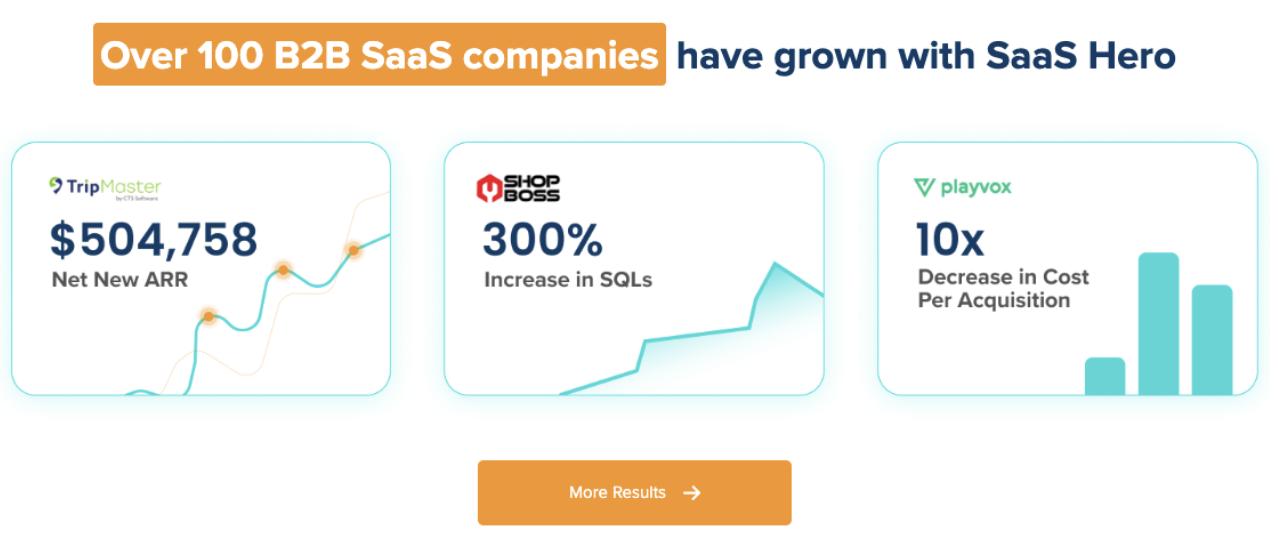
SaaSHero has already driven $504,000 in Net New ARR for clients like TripMaster with 20% conversion rates and 650% ROI. Playvox cut cost per lead by 90% through account restructuring and focused testing. The team works on flat monthly retainers starting at $1,250 with month-to-month terms, which removes percentage-of-spend conflicts.

| Monthly Spend | 1 Channel (Month-to-Month) |
|---|---|
| <$10K | $1,250 |
| $10-25K | $1,750 |
| $25-50K | $2,250 |
SaaSHero handles tracking implementation, landing page improvements, and creative development as a connected system. Their experience across many B2B SaaS verticals gives you proven playbooks instead of guesswork.
Summary and Next Steps for Your Team
Apply this 9-step checklist in order, starting with tracking, then targeting, creative, landing pages, and testing. Begin your audit now and scale using the benchmarks in this guide. Turn Facebook ads into a reliable Net New ARR growth channel by booking a discovery call with SaaSHero’s senior strategists.
Frequently Asked Questions
Timeline for 30% Conversion Rate Improvements
Most B2B SaaS companies see measurable gains within 2-4 weeks after fixing tracking and improving landing pages. Full attribution visibility usually takes 6-8 weeks because of longer sales cycles. Set baseline metrics first and track qualified leads instead of raw form submissions so results stay meaningful.
Choosing Between Broad and Interest-Based Targeting
Use broad targeting for top-of-funnel awareness and use job titles or company traits for bottom-funnel conversions. Broad targeting now performs better post-iOS 14.5 for reach and cost efficiency. Interest-based and intent-based audiences work best for retargeting people who already showed engagement.
Typical Costs for Professional Meta Ad Management
SaaSHero’s flat retainer model starts at $1,250 per month for accounts spending up to $10,000, plus a $1,000-2,000 setup fee. The engagement includes tracking setup, landing page improvements, and ongoing campaign management. Month-to-month terms reduce long contract risk while keeping performance accountability high.
What to Do If Results Stay Weak
Most poor results come from tracking problems or Event Match Quality below 90%. Recheck Conversions API setup, look for data silos between ad platforms and your CRM, and confirm that you optimize for qualified leads, not simple conversions. Consider a professional audit if the technical setup feels too complex.
Impact of 2026 Meta Updates on B2B SaaS
Conversions API v2.0 and the GEM AI model improve attribution accuracy and automation for B2B campaigns. Graph API v24.0 requires code updates by January 2026 to keep campaigns running smoothly. These updates reward teams with strong tracking while making manual, guess-based optimization harder without technical skills.
Ready to turn Facebook into a predictable growth channel for your SaaS? Book a discovery call with SaaSHero today.