




Key Takeaways
- GitHub marketing delivers the strongest devtools ROI, with lower CAC driven by organic stars, collaborations, and community relationships.
- AI-optimized technical documentation produces high ROI by capturing SEO traffic and AI discovery channels such as ChatGPT citations.
- Developer communities like Dev.to and Stack Overflow create organic virality and peer validation that support effective PLG adoption.
- Targeted LinkedIn ads and Product Hunt launches create fast wins and strong short-term ROI when they sit on top of solid organic foundations.
- Master 2-3 channels with reliable attribution for sustainable ARR growth, and get a customized channel roadmap that matches your current growth stage.
Executive Summary: Top 9 Developer Marketing Channels
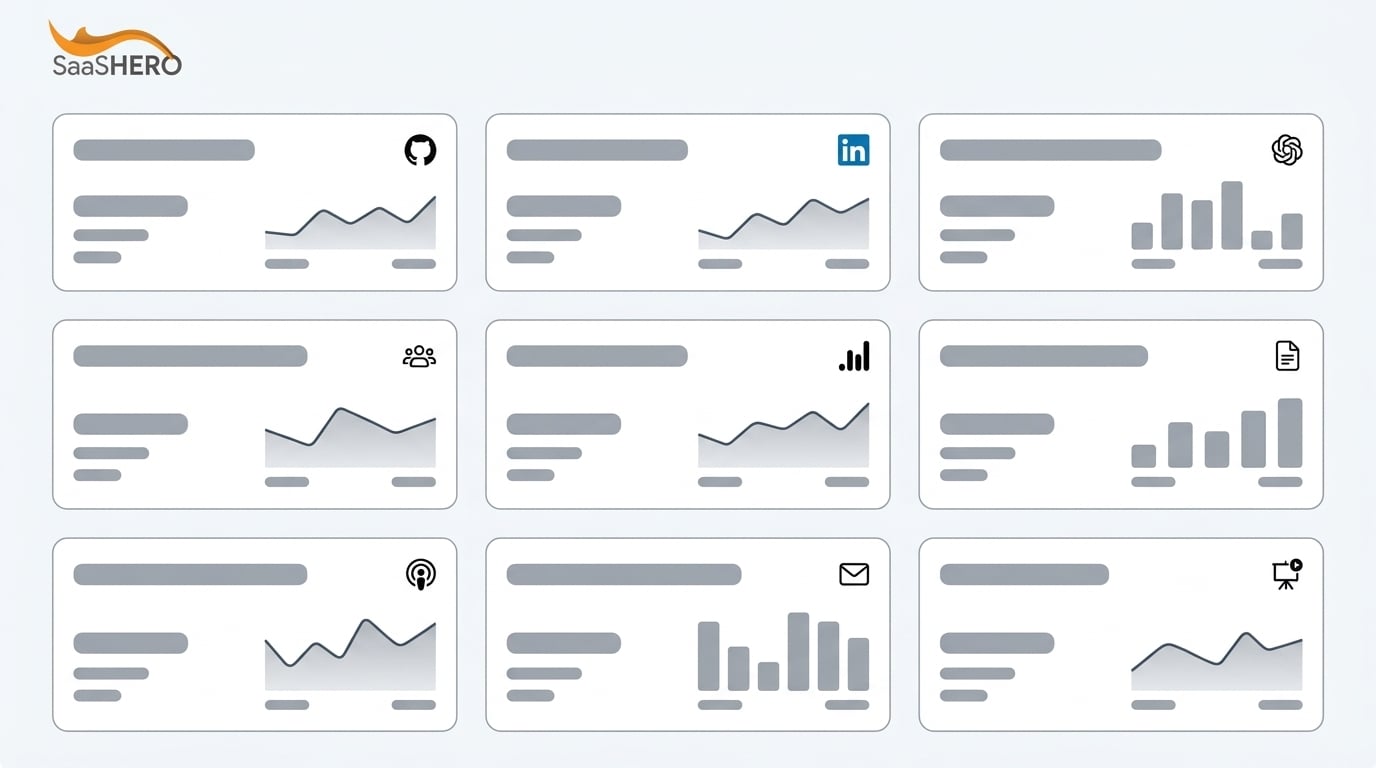
Based on 2026 industry benchmarks and case study analysis, the following devtools marketing channels rank highest for ROI and CAC reduction.
- GitHub Marketing: lower CAC via stars and collaborations
- Technical Documentation & AI-Optimized Content: high ROI from SEO and AI discovery
- Developer Communities (Dev.to, Stack Overflow): Organic virality and peer validation
- LinkedIn Ads (Competitor Conquesting): strong ROI targeting specific job titles
- Product Hunt Launches: #1 launches driving significant ARR growth
- Reddit & Hacker News: Niche targeting with authentic engagement
- PLG Freemium Loops: significant CAC reduction
- AI Discovery Networks: visitors often further along in the buying journey
- Targeted Paid Ads (Privacy-First): Post-cookie optimization strategies
The following table compares the four highest-impact channels by expected ROI timeline and primary data source, so you can prioritize based on current goals.
| Channel | ROI/CAC Impact | Timeline | Source |
|---|---|---|---|
| GitHub Marketing | lower CAC | 1-3 months | IdeaProof |
| SEO/Technical Docs | high ROI | 6-18 months | Gupta |
| PLG Strategies | significant CAC reduction | 1-3 months | Gupta |
| LinkedIn Ads | strong ROI | 2-4 weeks | SaaSHero Case Studies |
Successful devtools companies concentrate on mastering 2-3 channels instead of spreading efforts across every option. PLG companies often grow faster, and trial-to-paid conversion rates are typically 15-25% for B2B SaaS, while sales-led companies might see 20-30% lead-to-deal conversion.
How the DevTools Marketing Landscape Works in 2026
The devtools marketing landscape differs sharply from traditional B2B SaaS. Developers prefer peer recommendations over sales outreach, research tools through GitHub repositories and documentation, and discover products through dark-funnel channels that standard attribution rarely captures.
AI-powered discovery now shapes how developers find tools. This shift reflects how developers use AI assistants during active problem-solving, which makes these visitors more qualified than passive browsers from traditional search. Devtools marketers therefore need content structured for AI citations that can surface in ChatGPT, Gemini, and similar assistants.
The post-cookie environment also increases the value of organic and community-driven channels. PLG models can achieve faster growth because they match how developers evaluate tools through hands-on testing, peer validation, and gradual team adoption.
SaaSHero uses a platform-agnostic approach that focuses on channels capturing developers during active problem-solving instead of passive browsing. This approach includes GitHub integrations, documentation improvements, and community engagement strategies that build trust before any conversion attempt.
Understanding this landscape forms the foundation. The next step involves choosing which channels to prioritize based on your constraints, goals, and appetite for experimentation.
Key Strategic Decisions and Trade-offs
Choosing devtools marketing channels involves clear trade-offs between organic reach and paid velocity, community building and direct conversion, and short-term spikes and long-term compound growth.
GitHub Organic vs. Paid: Organic GitHub growth through open-source contributions and community engagement delivers sustainable, low-cost acquisition but usually needs 3-6 months to build momentum. Paid GitHub sponsorships and promoted repositories create immediate visibility, yet they lack the authenticity that developers trust.
Product Hunt Virality vs. Sustainability: Product Hunt delivers 5/5 Day 1 impact but only 2/5 long-term value. Launches create strong initial signups, then require supporting channels to convert attention into durable ARR growth.
Community Investment vs. Direct ROI: Developer communities such as Dev.to and Reddit demand authentic, long-term engagement without immediate conversion pressure. This patience pays off because these communities create the peer validation that enterprise buyers seek when they evaluate tools. Without this social proof, even strong product features struggle to overcome enterprise skepticism.
SaaSHero addresses these trade-offs through flat retainer pricing that reduces pressure to chase short-term vanity metrics. The month-to-month model supports experimentation across channels without long-term commitments that force premature scaling decisions. SaaSHero’s transparent pricing structure scales with your ad spend and channel complexity.

| Monthly Ad Spend | 1 Channel | 2 Channels | 3+ Channels |
|---|---|---|---|
| Up to $10k | $1,250 | $2,500 | $3,750 |
| $10k-$25k | $1,750 | $3,000 | $4,250 |
| $25k-$50k | $2,250 | $3,500 | $4,750 |
Current Approaches and Emerging Practices
GitHub Marketing Excellence: Leading devtools companies treat GitHub as their primary marketing platform. They refine repository descriptions for search, publish comprehensive documentation that ranks in Google, build contributor communities, and use GitHub’s social features for organic discovery. Claude Code contributes 4% of all public GitHub commits, which highlights GitHub’s role as the main execution environment for AI devtools.
AI-Optimized Documentation: With 93% of Google AI Mode searches ending without clicks, devtools teams need documentation that AI systems can easily parse and reference. Effective documentation uses structured data markup, clear API examples, and content that AI assistants can quote directly.
Developer Community Templates: Effective Dev.to strategies rely on practical tutorials, transparent lessons from building tools, and thoughtful contributions to discussions without overt promotion. The focus stays on genuine value that builds expertise and trust.
LinkedIn Competitor Conquesting: SaaSHero’s strong ROI TripMaster case study shows the impact of targeting developers searching for competitor alternatives. This strategy uses comparison landing pages, precise job-title targeting, and negative keywords that filter out navigational searches.

Quick-Win Checklist for GitHub Marketing:
- Optimize repository descriptions with relevant keywords and clear value propositions.
- Create comprehensive README files that function as high-converting landing pages.
- Build contributor guidelines that encourage community participation.
- Use GitHub Pages for documentation that can rank in search engines.
- Engage authentically in issues and discussions across related repositories.
These tactics deliver strong results, yet not every company can execute all of them at once. Your maturity stage determines which channels deserve attention first.
Readiness, Maturity, and Implementation Structure
Devtools marketing channel selection depends heavily on company maturity and available resources. A staged implementation creates compound growth while keeping focus manageable.
Stage 1 (Seed/Pre-Revenue): Focus on GitHub marketing and technical documentation. These channels require time more than budget and create the base for every later initiative. Lovable evolved from gpt-engineer, the open-source project its founders created in mid-2023 that has over 50,000 GitHub stars, as the rebranded commercial web version originally called gptengineer.app before commercialization.
Stage 2 (Early Revenue): Add developer communities and Product Hunt launches. These channels amplify existing GitHub momentum and create viral moments that drive large traffic spikes.
Stage 3 (Scale-Up): Layer in paid channels such as LinkedIn ads and targeted competitor campaigns. At this stage, organic channels provide credibility and social proof that increase paid performance.
Implementation Timeline: Week 1-2 focuses on GitHub optimization and documentation creation. Month 2 introduces community engagement and content production. Month 3 and beyond adds paid channels based on insights from organic performance data.
Readiness Assessment Questions: You first confirm whether you have technical documentation that developers can actually use. You then assess your ability to commit to authentic community engagement without immediate conversion pressure. Finally, you review whether you have case studies or examples that demonstrate real value. SaaSHero’s $1,000 audit process addresses these questions and produces a customized channel roadmap.
Common Pitfalls and Diagnostic Questions
The most common devtools marketing failures come from treating developers like traditional B2B buyers and chasing vanity metrics instead of meaningful engagement.
GitHub Vanity Stars: Teams focus on star count instead of meaningful contributions and community engagement. Stars alone never convert to ARR without nurturing and clear conversion paths.
Spammy Community Engagement: Promotional posts in developer communities that lack genuine value backfire quickly and damage brand reputation.
Missing Negative Keywords: Paid campaigns that ignore negative keywords waste budget on users seeking login pages instead of evaluating alternatives.

Diagnostic Questions: You review whether your CAC payback period exceeds 80 days. You check if you track GitHub traffic through to trial conversions. You confirm whether attribution connects community engagement to revenue. SaaSHero’s CRM revenue tracking closes these gaps by linking upstream touchpoints to downstream revenue.
Illustrative Scenarios and Team Archetypes
The Bootstrap Founder: A solo founder with a $500k ARR devtool needs cost-effective growth. The strategy combines GitHub marketing with Dev.to content creation. SaaSHero’s $1,250 per month dedicated manager delivers professional execution without breaking the budget.
The Series A Scaler: A well-funded team needs rapid, efficient growth to hit investor milestones. The strategy emphasizes LinkedIn competitor conquesting and aggressive Product Hunt campaigns. SaaSHero’s $4,500 full marketing team provides the expertise and bandwidth for multi-channel execution.
The Agency Migrator: A company moving away from a traditional agency that delivered vanity metrics without revenue impact. Like Playvox, which achieved a 10x decrease in cost per lead, the focus shifts to revenue-first tracking and developer-specific channels that previous agencies ignored.
FAQ
Which delivers better ROI for devtools: GitHub marketing or LinkedIn ads?
GitHub marketing delivers higher long-term ROI through compound organic growth and community building, while LinkedIn ads provide faster initial results with measurable short-term ROI. The strongest strategies combine both, using GitHub to build credibility and LinkedIn to capture high-intent prospects who actively evaluate solutions.
What’s the best AI discovery channel for devtools in 2026?
Technical documentation optimized for AI citations delivers the highest ROI for AI discovery. Effective programs use structured content that appears in ChatGPT and Gemini responses, comprehensive API documentation, and code examples that AI assistants can reference when developers ask implementation questions.
How does SaaSHero specifically scale devtools marketing differently?
SaaSHero focuses exclusively on B2B SaaS and understands developer psychology, using flat-fee pricing that aligns incentives with client success instead of ad spend. The month-to-month model supports rapid iteration across channels, and revenue-first tracking connects GitHub stars and community engagement to actual ARR growth.

What’s a realistic timeline for seeing results from developer community marketing?
Authentic community engagement usually needs 3-6 months to build credibility and produce meaningful traffic, yet the compound effects can drive substantial long-term growth. Consistent value creation matters more than immediate conversion.
How do you measure ROI from channels like GitHub and developer communities?
Effective measurement connects upstream engagement metrics to downstream revenue through reliable attribution. Strong setups track GitHub traffic to trial signups, community referrals to paid conversions, and the influence of social proof on enterprise deal velocity and size.
Conclusion and Practical Next Steps
The most effective devtools marketing channels in 2026 prioritize authentic developer engagement instead of traditional advertising. GitHub marketing, AI-optimized documentation, and developer communities create the foundation for sustainable growth, while targeted paid channels amplify existing organic momentum.
Success depends on understanding developer psychology, using attribution that connects community engagement to revenue, and maintaining authentic relationships instead of chasing quick conversions. See how SaaSHero’s proven execution has driven significant Net New ARR for devtools clients with similar challenges.
Immediate Next Steps: Start with a comprehensive audit of your current GitHub presence and documentation quality. Identify 2-3 developer communities where your target users already participate. Build a content calendar that delivers genuine value instead of pure promotion. Finally, implement tracking that measures the full developer journey from first touch to revenue.