




How Leading Agencies Prove Facebook Ads ROI in B2B SaaS
- Top Facebook ads agencies prove ROI with revenue KPIs like Net New ARR, ROAS targets of 4-8x, and payback periods under 90 days in 2026 B2B SaaS.
- Agencies implement privacy-proof tracking with Facebook Pixel, CAPI, and CRM integrations to capture full customer journeys despite iOS restrictions.
- Teams use multi-touch attribution models like W-Shaped or data-driven to credit touchpoints across complex B2B sales cycles.
- They run A/B tests, incrementality studies, and revenue audits, with case studies showing outcomes such as $504k ARR and 650% ROI.
- Avoid agency traps like percentage-of-spend fees and schedule a discovery call with SaaSHero for transparent, revenue-aligned Facebook ads management.
Step 1: Lock In Revenue KPIs Before Campaign Launch
Top agencies require clear ARR and pipeline targets in contracts before any campaigns go live. This alignment prevents teams from chasing vanity metrics that fail to support real business growth.
|
Metric Type |
Vanity Metrics |
Revenue Metrics |
B2B Issue |
|
Awareness |
Impressions, Reach |
Brand Search Volume |
Impressions do not pay bills |
|
Engagement |
CTR, Likes, Shares |
Demo Requests |
Social engagement ≠ buying intent |
|
Conversion |
Form Fills, Downloads |
Sales Qualified Leads |
Most leads never become customers |
|
Revenue |
Pipeline Value |
Net New ARR |
Pipeline can stall indefinitely |
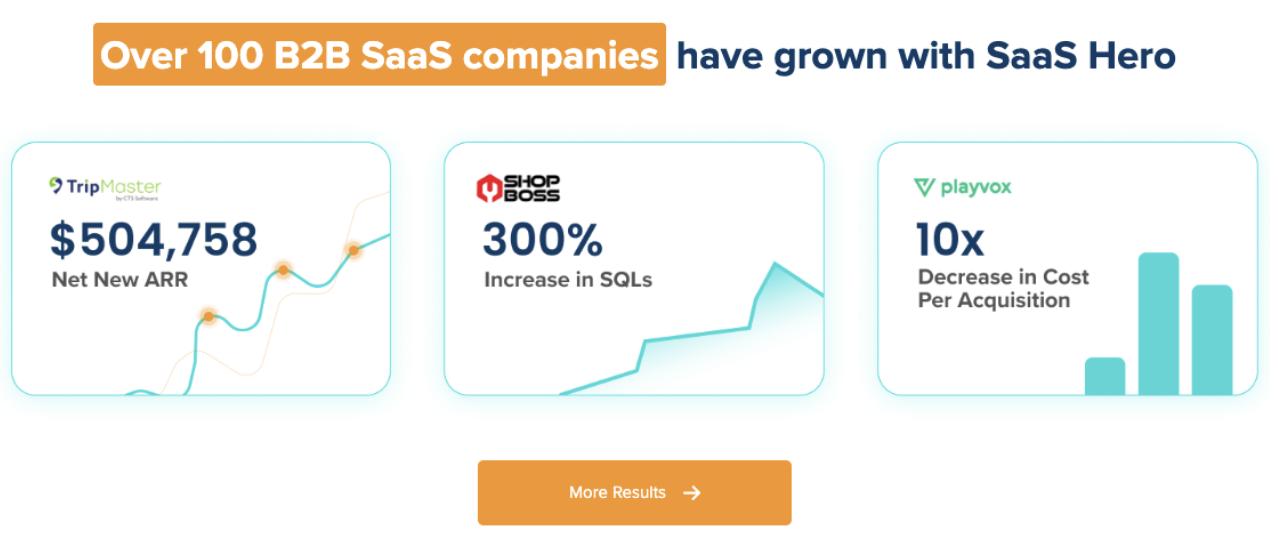
SaaSHero set a $504,000 Net New ARR target for TripMaster’s transit software campaigns. The flat-fee retainer model at $1,250 per month for up to $10k spend removes the percentage-of-spend trap that rewards higher budgets instead of better performance.

Step 2: Build Privacy-Resilient Tracking With CAPI, Pixel, and CRM
Top agencies pair Facebook Pixel with Conversions API and CRM integrations to capture the full customer journey. CAPI supplements Facebook Pixel with server-side tracking for comprehensive conversion events, ensuring privacy compliance and reliable data despite cookie restrictions.
The implementation process follows a clear sequence.
- Install Facebook Pixel for client-side tracking.
- Configure CAPI for server-side event transmission.
- Pass GCLID or equivalent parameters into HubSpot or Salesforce.
- Map CRM lifecycle stages to Facebook events for accurate revenue tracking.
Top agencies connect tools like Cometly and HubSpot to track SQL progression through to closed-won ARR. For B2B SaaS with six-month sales cycles and multiple decision-makers, Time-Decay or W-Shaped attribution models provide stronger insights by weighting touchpoints across the funnel.
Step 3: Use Multi-Touch Attribution to Reflect Real Journeys
Single-touch attribution models ignore the complexity of B2B buying journeys. Data-driven attribution uses machine learning to compare converting and non-converting paths and assigns credit based on incremental lift from each touchpoint.
|
Attribution Model |
Credit Distribution |
B2B SaaS Fit |
Best Use Case |
|
Last-Click |
100% to final touch |
Poor |
Single-session purchases |
|
Time-Decay |
More to recent touches |
Good |
Long consideration cycles |
|
Data-Driven |
ML-optimized distribution |
Excellent |
High-volume campaigns |
|
W-Shaped |
22.5% each to key stages |
Excellent |
Complex B2B funnels |
Top agencies use Looker Studio pipeline visualizations to show how ads support multi-touch customer journeys. A prospect may see a Facebook ad without clicking, later search the brand on Google, and then convert via search; last-click gives Facebook zero credit, while MTA assigns partial credit for the assist and reveals incremental revenue from early awareness.
Step 4: Define Strong ROAS Targets for SaaS Facebook Campaigns
Leading agencies build transparent ROAS dashboards that show real-time cost per acquisition, payback periods, and revenue attribution. B2B SaaS mid-market campaigns average 2.6 ROAS, with the top 25% reaching 4.1.
Key benchmarks for B2B SaaS Facebook campaigns include the following.
- Average ROAS of 2.6x for mid-market SaaS.
- Top quartile ROAS of 4.1x.
- Cold traffic ROAS around 2.0x.
- Retargeting ROAS in the 4.0x to 5.5x range.
SaaSHero’s pricing structure aligns directly with client success instead of ad spend volume. The month-to-month contract model creates ongoing accountability that encourages continuous performance improvements.
Step 5: Show Real Optimization With A/B Tests and Incrementality
Top agencies prove their impact through controlled testing and incrementality studies. They run competitor conquesting campaigns that target users researching alternatives, geographic holdout tests, and creative variation experiments.
These agencies also apply heuristic conversion rate improvements alongside campaigns and often achieve 20% conversion lifts through focused landing page changes. Testing frameworks typically include the following elements.
- Audience segmentation tests comparing lookalike and interest-based groups.
- Creative format comparisons across video, carousel, and single image.
- Landing page message matching experiments to align with ad copy.
- Bid strategy tests that compare cost cap and bid cap approaches.
Step 6: Run Revenue Audits and Share Case Study Proof
Agencies need to provide Net New ARR audits that connect closed-won revenue to specific Facebook campaigns. This process depends on CRM integration and attribution that goes beyond platform-reported conversions.
|
Client |
Vertical |
Outcome |
ROI/Payback |
|
TripMaster |
Transit Software |
$504k Net New ARR |
650% ROI, 80-day payback |
|
TestGorilla |
HR Tech |
$70M Series A raised |
80-day payback period |
|
Playvox |
CX Software |
163% volume increase |
10x lower cost per lead |
These case studies highlight verifiable revenue impact instead of surface-level engagement metrics. The focus on Net New ARR confirms that reported growth reflects true business expansion rather than upsells to existing customers.
Step 7: Avoid Common Agency Traps and Demand Alignment
Many agencies rely on long-term contracts, junior account managers, and percentage-of-spend fee structures. Most agencies fail to deliver marketing ROI because they obsess over vanity metrics like impressions, clicks, engagement, follower counts, and video views that do not connect to revenue or business growth.
Watch for clear red flags when you evaluate a Facebook ads agency.
- Reporting focused only on CTR, CPM, and reach metrics.
- Refusal to provide client-owned analytics access.
- Requirements for 6 to 12 month contract commitments.
- Percentage-of-spend fees on budgets above $25k per month.
SaaSHero’s month-to-month model with senior-led account management removes these risks. The flat-fee structure keeps recommendations tied to performance data instead of fee growth.
Teams that want proven Facebook ROI tracking can book a discovery call and request an audit of their current attribution setup.
FAQs
How should B2B SaaS teams evaluate Facebook ads marketing ROI?
Teams should focus on Net New ARR audits that connect closed-won revenue to specific Facebook campaigns. Multi-touch attribution models need to reflect the complex B2B buying journey, which often includes 6 to 10 touchpoints over 3 to 6 months. CRM integration then tracks progression from first ad impression through SQL qualification to closed-won deals.
Which Facebook ads ROAS reporting tools give the most reliable data?
Teams should combine Facebook’s native attribution with third-party tools such as Cometly, HubSpot, or Wicked Reports for unbiased multi-touch attribution. These platforms merge CRM data with ad platform metrics and provide revenue attribution that moves beyond last-click models. Server-side tracking through CAPI protects data accuracy despite iOS privacy limits.
What counts as strong ROI for Facebook ads in B2B SaaS?
Mature B2B SaaS campaigns should target ROAS of 4x to 6x with payback periods under 90 days. Cold traffic should reach at least 2x ROAS, while retargeting campaigns should exceed 4x. Teams should aim for LTV to CAC ratios above 3 to 1 and confirm that attributed revenue reflects Net New ARR instead of expansion from current customers.
How can marketers measure Facebook ad ROI in complex B2B sales cycles?
Marketers can use W-shaped or data-driven attribution models that credit multiple touchpoints across the 3 to 6 month buying journey. CAPI integrations with CRM systems then track offline conversions and pipeline movement. Conversion values should match average deal size and close rates so campaigns optimize for revenue instead of raw lead volume.
What are the most common Facebook ads ROI tracking mistakes agencies make?
Common mistakes include relying only on platform-reported metrics without CRM integration and using last-click attribution for complex B2B journeys. Many agencies also optimize for vanity metrics like CTR instead of revenue outcomes and ignore view-through attribution in awareness campaigns. The most serious error occurs when teams fail to distinguish correlation from causation in conversion reporting.
Conclusion and Next Steps for Revenue-Focused Facebook Ads
This seven-step framework for proving Facebook ads ROI depends on strong tracking, transparent reporting, and aligned incentives between agency and client revenue goals. Top agencies combine CAPI, multi-touch attribution, and CRM integration to show a clear impact on Net New ARR.
The move from vanity metrics to revenue attribution changes how B2B SaaS companies judge marketing performance. Month-to-month agency relationships with flat-fee pricing create ongoing accountability and support continuous performance gains.
Teams ready for revenue-focused Facebook advertising with transparent attribution can book a discovery call and implement a proven ROI framework.