




Key Takeaways
- B2B SaaS funnels often see only 15–21% MQL-to-SQL conversion. Systematic friction removal can unlock major Net New ARR, as shown by TripMaster’s $504,758 gain.
- Good friction qualifies leads, while bad friction blocks conversions. Use heuristic audits, heatmaps, and message match improvements across TOFU, MOFU, and BOFU to separate the two.
- High-impact tactics include competitor conquest pages, ungated demos and ROI calculators, transparent pricing, and above-the-fold social proof that speed up pipeline and lower CAC.
- Measure success with revenue metrics such as Net New ARR, CAC reduction, and pipeline velocity instead of vanity metrics that hide real ROI.
- Teams ready to apply these tactics can book a discovery call with SaaSHero for a friction audit starting at $1,250 per month.

Five Core Friction Reducers Across Your SaaS Funnel
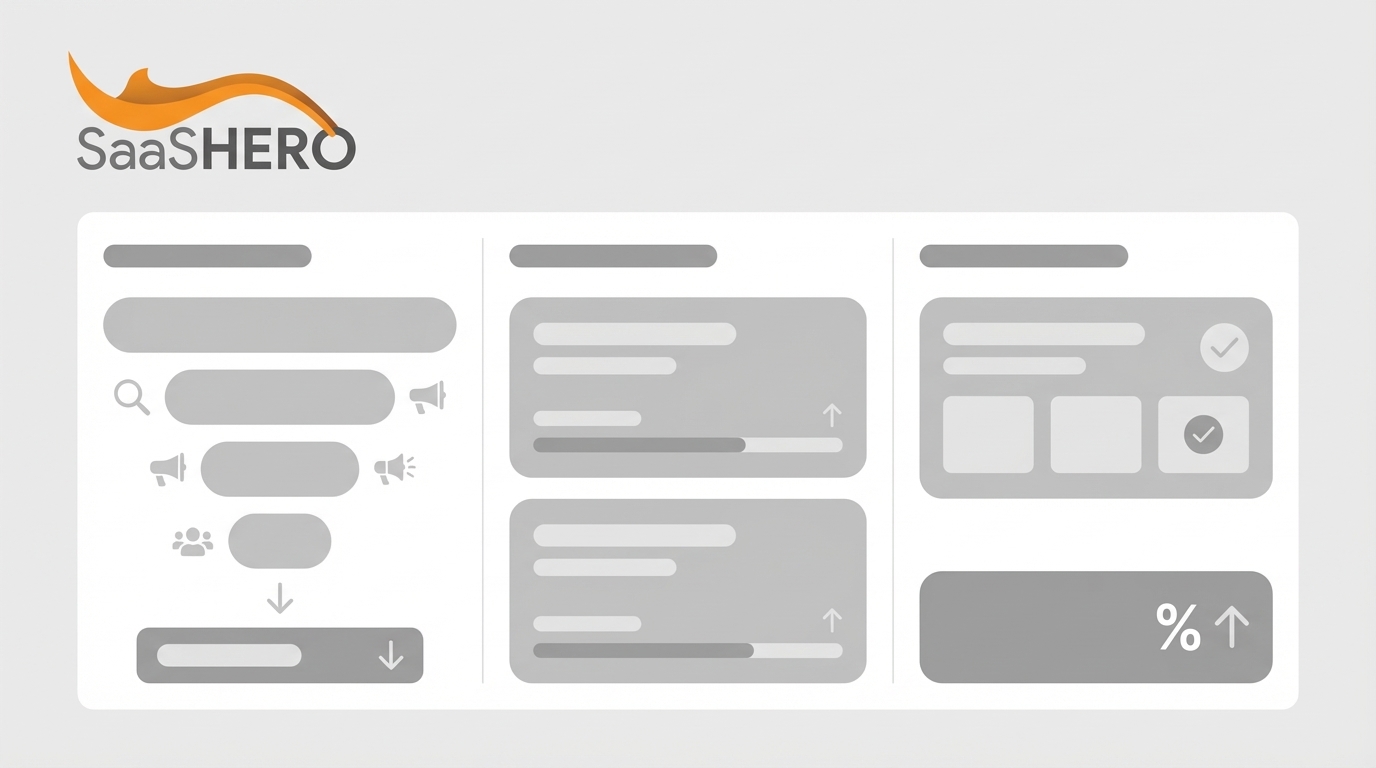
Five core tactics consistently reduce friction across every stage of a B2B SaaS funnel.
- Heuristic Audits: Run structured reviews using seven conversion principles such as relevance, clarity, trust, and friction to uncover fast wins.
- Heatmap Analysis: Use visual behavior data to see where users drop off, then prioritize fixes based on those patterns.
- Competitor Conquest Pages: Capture high-intent buyers who search for alternatives with focused landing pages that speak to their exact intent.
- Ungated Demos and ROI Calculators: Deliver immediate value without form walls to build trust early and qualify serious prospects.
- Transparent Pricing: Publish clear pricing and cost structures so buyers can make decisions faster with fewer sales calls.
These tactics create a foundation for consistent friction reduction across TOFU, MOFU, and BOFU.
TOFU Fixes: Capture High-Intent Traffic and Reduce Bounces
Top-of-funnel friction usually shows up as high bounce rates and weak message match between ads and landing pages. Teams need to catch users at peak intent while removing barriers to first engagement.
1. Competitor Conquesting with Intent-Based Pages
Target users who search for competitor pricing, alternatives, and complaints with pages that speak directly to those queries. Playvox cut cost per lead by 10x through focused competitor campaigns and smart negative keyword use.
Implementation checklist:
- Create separate pages for pricing intent ([Competitor] pricing), problem intent ([Competitor] alternatives), and validation intent ([Competitor] reviews).
- Use competitor names only in factual comparisons and avoid logos or misleading headlines.
- Add negative keywords for brand-only searches to avoid wasted spend on navigational queries.
- Offer switching incentives such as free migration or contract buyouts.
2. Heuristic-Based Landing Page Reviews
Run heuristic reviews before investing in A/B tests. Focus on ad-to-page relevance, five-second value clarity, visible trust signals, and obvious friction points.

Key evaluation areas:
- Message match between ad copy and primary headline.
- Value proposition clarity within the first five seconds.
- Trust signals above the fold such as G2 badges and customer logos.
- Form field count, layout, and CTA placement.
3. Heatmap Analysis to Spot Drop-Offs
Use tools like Hotjar to see where users scroll, click, and exit. This visual data exposes friction that standard analytics often miss and guides targeted page changes.
4. Message Match Across Ads and Landing Pages
Align ad copy, landing page headlines, and value propositions so they tell one consistent story. Misaligned messaging creates cognitive friction, which increases bounces and lowers lead quality.
SaaSHero builds competitor conquest pages that help clients grow ARR efficiently. Book a discovery call to roll out these TOFU tactics.
MOFU Plays: Build Trust and Improve Pipeline Quality
Middle-of-funnel friction appears when prospects want more detail but hit walls when they try to access it. Pre-recorded demos and pricing calculators cut enterprise sales cycles by about 17% on average by giving value without sales pressure.
1. Interactive Demos and ROI Calculators
Offer self-service tools that let prospects explore your product without booking a call. This lowers friction and highlights buyers who invest real time in deeper exploration.
Implementation approach:
- Build product tours that spotlight core features for each main use case.
- Create ROI calculators that show potential savings or revenue gains.
- Gate advanced features behind light forms that ask only for email.
- Track engagement depth and feed that data into lead scoring.
2. Social Proof Above the Fold
Place customer logos, G2 badges, and short testimonials near the top of key pages to calm anxiety and build trust quickly. Consistent experiences across touchpoints keep users confident and moving forward.

3. Progressive Information Layout
Structure content so it follows the buyer journey, with simple overviews first and deeper detail as intent rises. Use gated content only for advanced resources and keep basic information open.
4. Multi-Channel Nurture Sequences
Set up nurture flows that answer common objections and share case studies tailored to industry and use case. These sequences keep prospects engaged during long B2B evaluations.
BOFU Tactics: Remove Final Barriers and Close Faster
Bottom-of-funnel friction often comes from unclear pricing, complex trials, and clumsy handoffs. Flexible plans reduce BOFU friction by helping buyers commit without long negotiations.
1. Transparent Pricing and TCO Comparisons
Remove pricing uncertainty with clear tiers, total cost of ownership breakdowns, and comparison tables. TestGorilla’s transparent pricing helped them reach an 80-day payback period and secure a strong Series A.
Pricing transparency elements:
- Clear tier structures with feature breakdowns.
- Line items for implementation and onboarding costs.
- Annual and monthly pricing options side by side.
- ROI projections based on typical usage patterns.
2. One-Click Trials and Simple Onboarding
Cut trial signup forms to the essentials. Use progressive profiling to collect more data after users see value instead of blocking them at the start.
3. Smooth Sales Handoffs
Design tight transitions from marketing to sales with automatic CRM updates, Slack alerts, and context-rich lead scores. This keeps hot prospects from slipping away during final decisions.
4. Risk Reversal and Guarantees
Lower purchase risk with money-back guarantees, free migration, or pilot programs. DearDoc lifted close rates by 20–30% with flexible payment options that reframed cost objections.
SaaSHero’s BOFU programs remove friction at critical moments and deliver measurable ROI. Book a discovery call to apply these conversion-focused tactics.
Measuring Revenue Impact from Friction Reduction
Teams should track friction work with revenue metrics instead of surface-level indicators. Pipeline velocity often ranges from $743 to $2,456 per day in B2B SaaS, which gives a benchmark for improvement.
Key metrics to monitor:
- Net New ARR generated from improved funnels.
- CAC reduction by funnel stage.
- Pipeline velocity gains measured as deals per day.
- Conversion rate lifts at each stage transition.
- LTV growth from better-qualified leads.
Set up GCLID-to-CRM tracking with tools like Looker Studio so ad clicks connect directly to closed revenue and show the real impact of friction work.
FAQ: Friction Reduction in B2B SaaS Funnels
What is the difference between good friction and bad friction?
Good friction qualifies leads and improves LTV by collecting details such as company size, budget range, or use case. These fields help teams prioritize high-value prospects and tailor outreach. Bad friction blocks qualified buyers with long forms that ask for irrelevant data, unclear pricing, or confusing navigation. Good friction feels purposeful and tied to better service, while bad friction feels random and raises doubts about your product and team.
Which tools work best for finding friction in SaaS funnels?
Heatmap tools like Hotjar show where users click, scroll, and exit, which highlights friction zones. Google Analytics 4 reveals quantitative drop-offs between funnel stages, and session recordings expose specific usability problems. Heuristic frameworks give structured reviews of relevance, clarity, trust, and friction without waiting for large traffic samples. CRM platforms such as HubSpot or Salesforce connect first ad click to closed revenue and give full attribution visibility.
How fast can SaaS teams see results from friction reduction?
Teams often see early gains within two to four weeks from simple changes such as shorter forms, sharper headlines, and better CTA placement. Larger wins from new landing pages, conquest campaigns, and full heuristic programs usually appear within 60 to 90 days. Timelines depend on traffic volume and how severe current friction is. Funnels with major usability gaps can see 20–30% conversion lifts quickly, while mature funnels may need deeper testing to unlock smaller but meaningful gains.
What conversion lifts should SaaS companies aim for?
Targets vary by baseline and stage, but strong friction programs often deliver 20–40% conversion lifts within 90 days. Weak funnels can sometimes double conversion in specific stages, while advanced funnels may see 10–20% gains. Focus on stage-level metrics instead of only total funnel conversion. A five-point lift in MQL-to-SQL conversion can raise closed revenue by 12–18%. Measure success with Net New ARR growth and CAC reduction, not isolated conversion numbers.
How do friction strategies change by vertical and company size?
Enterprise SaaS usually needs heavier social proof, detailed security content, and robust ROI cases because cycles are long and stakeholders are many. SMB SaaS benefits from simple pricing, strong self-service flows, and fast trial-to-purchase paths. Verticals such as healthcare and finance require clear compliance details, while martech tools need strong integration stories and industry-specific case studies. Company size also shapes focus. Startups should prioritize low-cost, high-impact fixes like form reduction and message match, while larger teams can invest in personalization and multivariate testing.
These twelve friction reduction tactics work best with consistent execution and ongoing iteration. Partner with specialists who understand B2B SaaS buyer psychology and have a track record of scaling revenue through focused funnel work. SaaSHero provides full friction audits and implementation support with transparent month-to-month pricing starting at $1,250. Book a discovery call to remove revenue-killing friction from your funnel.