




Written by: Aaron Rovner, Founder, Saas Hero
Key Takeaways
-
B2B SaaS companies waste 36.1% of Google Ads spend on irrelevant terms. Regular audits reclaim 25-40% of budget through negative keywords and search term analysis.
-
Implement GCLID-to-CRM tracking with 90-day attribution windows to connect ad spend to Net New ARR, not just form fills.
-
Structure campaigns by intent (branded 20%, competitor 10%, category 40%, pain-point 30%) and separate TOFU, MOFU, and BOFU campaigns to drive SQLs.
-
Audit landing pages for ad relevance to boost Quality Scores, cut CPCs by 3-5x, and improve conversions with dedicated pages per ad group.
-
Follow this 10-step checklist quarterly and get expert help implementing these optimizations with access to our free audit template.
Google Ads Audits for B2B SaaS, Explained
A Google Ads audit is a systematic review of your account that uncovers waste, misconfigurations, and clear improvement opportunities. B2B SaaS teams use audits to shift focus from surface metrics like CTR to revenue attribution and Net New ARR.
Core elements of a strong SaaS audit include:
-
Identifying negative keyword gaps that trigger 200 or more irrelevant queries
-
Fixing GCLID-to-HubSpot integration so revenue tracks back to the right campaigns
-
Rebuilding campaigns around SQLs and pipeline generation instead of raw leads
-
Analyzing competitor conquesting efficiency and cost per qualified opportunity
Best Times to Run a Google Ads Audit
Run a Google Ads management audit during key inflection points in your growth.
-
After agency handovers to escape percentage-of-spend fee traps
-
During quarterly performance reviews or when ROAS drops more than 20%
-
Before VC fundraising to prove unit economics and CAC efficiency
-
Before scaling Performance Max or AI-driven campaigns
Complex B2B SaaS sales cycles magnify waste over time. Regular audits prevent waste from snowballing to levels that can reach $25,800 per day in large enterprise accounts.
The Ultimate 10-Step Google Ads Management Audit Checklist for B2B SaaS
1. Account Structure and Funnel Alignment
Start with your campaign architecture and confirm it reflects a SaaS funnel, not a generic search setup. Optimal account structure separates campaigns by intent: branded (20% budget), competitor (10%), category (40%), and pain-point (30%). Watch for broad match waste that drains about 15.6% of the budget when SaaS terms trigger irrelevant searches like “CRM jobs” or “free CRM.”
Audit checklist:
-
Verify tight ad groups with 5-10 closely related keywords to keep ads relevant and protect Quality Score.
-
Ensure separate campaigns for each buyer journey stage so you can tailor bids and messaging.
-
Check for clear TOFU, MOFU, and BOFU campaign separation to align spend with conversion intent.
-
Review budget allocation across campaign types so high-intent segments receive enough investment.
2. Keyword Performance and Negative Coverage
Evaluate your keyword and negative keyword strategy with a focus on waste removal. Top quartile B2B SaaS performers maintain 200-500 negative keywords, while bottom quartile accounts often sit below 50. Negate navigational searches for competitor brands and focus on pricing and complaint modifiers that signal buying intent.
Key audit points:
-
Review the search terms report for irrelevant queries that consume budget.
-
Add negatives for “free,” “cheap,” “jobs,” “tutorial,” and “what is” when they do not match your ICP.
-
Check for competitor brand name negation when no intent modifiers appear.
-
Verify industry-specific negative keyword coverage to block unqualified segments.
3. Conversion Tracking and Attribution Setup
Confirm that your tracking connects ad clicks to revenue, not just form fills. Verify GCLID integration with HubSpot or Salesforce for accurate revenue attribution. Top quartile B2B SaaS advertisers import offline SQL and closed-won conversions from CRMs, while bottom quartile accounts stop at landing page form fills. Configure Data-Driven Attribution as the default model for 2026 campaigns.
Conversion audit essentials:
-
Confirm offline conversion imports from your CRM into Google Ads.
-
Set 90-day attribution windows that reflect typical B2B sales cycles.
-
Verify Enhanced Conversions setup to gain a 15-30% accuracy improvement.
-
Check multi-touch attribution model configuration across platforms.
Work with our team to set up revenue-focused conversion tracking that connects ad clicks to closed revenue.
4. Bidding Strategy and Smart Automation
Review your bidding strategy with current AI behavior in mind. Google’s Smart Bidding Exploration temporarily lowers ROAS targets to capture new users and queries that did not qualify before. Avoid aggressive automation before you reach at least 30 conversions per month and use manual CPC first to establish a clean baseline.
Bidding strategy checklist:
-
Verify sufficient conversion volume before enabling Smart Bidding.
-
Check Smart Bidding Exploration settings and guardrail ranges.
-
Review Target ROAS changes after any attribution model updates.
-
Audit bid adjustments for device, location, and time of day.
5. Ad Copy and Creative Assets
Assess Responsive Search Ads and creative assets for clarity and SaaS relevance. Google’s Asset Studio uses AI to generate creative, while brand guidelines keep messaging on voice. Prioritize SaaS-specific CTAs like “Get Demo” or “Start Free Trial” instead of generic “Learn More” language.
Ad copy audit points:
-
Review RSA asset performance reports to identify winning headlines and descriptions.
-
Check for clear SaaS value propositions tied to pain points and outcomes.
-
Verify dynamic keyword insertion tests without sacrificing clarity.
-
Assess ad relevance scores and their impact on Quality Score.
6. Landing Page Experience and CRO
Evaluate landing pages for alignment with ad intent and frictionless conversion. Landing page mismatches cause Quality Scores of 1-3, which inflate CPCs by 3-5x. One account improved from 137 conversions at $1,000 CPA to a projected 300+ conversions at $560 CPA after adding dedicated pages per ad group.

Landing page evaluation criteria:
-
Match ad copy promises directly to page headlines and subheads.
-
Verify mobile responsiveness and keep LCP under 2.5 seconds.
-
Check for trust signals and social proof above the fold.
-
Assess form friction, required fields, and CTA visibility.
7. Competitor Conquesting and Comparison Pages
Inspect competitor campaigns and their landing experiences for efficiency. Competitor conquesting with dedicated comparison pages delivers 39% lower MQL costs even when CPCs run higher. Use negative keywords to avoid paying for pure navigational searches.
Competitor audit checklist:
-
Verify dedicated “YourProduct vs CompetitorX” landing pages that mirror the intent of your conquesting ads.
-
Check negative keywords for competitor brand names without qualifiers.
-
Review pricing, problem, and review intent targeting for high-intent traffic.
-
Assess legal compliance and trademark usage across ads and pages.
8. Budget Allocation and ROAS Targets
Review how your budget flows across campaigns and how that spend converts into payback. Bottom quartile B2B SaaS advertisers allocate only 40-60% of budget to non-brand campaigns, while top quartile teams invest 60-75%. Aim for 4-12 month CAC payback periods and 3-5x ROAS to support sustainable growth.
Budget optimization review:
-
Calculate true CAC, including agency fees, tools, and internal overhead.
-
Verify tracking for your target payback period, such as 80 days for fast-growth teams.
-
Review campaign-level budget allocation for alignment with intent and performance.
-
Assess how shared budgets affect your top-performing campaigns.
9. Search Terms Report Deep Dive
Use the search terms report to uncover patterns of waste and new opportunities. Search term hemorrhaging wastes 15-40% of spend in many accounts, while healthy accounts keep this under 5%. Use Google Ads Editor for fast bulk negative keyword updates.
Search terms audit process:
-
Export 90 days of search terms data for pattern and theme analysis.
-
Identify high-spend, zero-conversion queries and add them as negatives.
-
Flag informational intent terms like “tutorial” or “what is” that do not convert.
-
Review match type performance and broad match efficiency by campaign.
Let our specialists handle your search terms analysis and negative keyword strategy implementation.
10. Revenue Attribution and Forecasting
Build revenue tracking and forecasting dashboards that reflect your real sales cycle. B2B SaaS sales cycles average 266 touchpoints and run 90-180 days, which requires extended conversion windows and data-driven attribution to credit early interactions.
Revenue attribution audit:
-
Verify CRM integration for accurate closed-won revenue tracking by campaign.
-
Set up Looker Studio dashboards for clear Net New ARR visibility.
-
Extend the attribution windows mentioned earlier so they match your actual sales cycle length.
-
Implement pipeline value and SQL cost tracking for each channel.
Tools That Power a SaaS Google Ads Audit
Use a focused tool stack to run faster, deeper audits. Essential tools include Google Ads Editor for bulk changes, Looker Studio for revenue dashboards, and CRM integrations like HubSpot for accurate attribution. Paid tools such as Optmyzr add extra insights, but partnering with a specialized SaaS agency often delivers better ROI than stacking tool subscriptions alone. Understanding the cost structure of professional audits helps you evaluate this ROI.
How Much Does a Google Ads Audit Cost?
Expect professional Google Ads audits to range from $1,000 to $2,000 for comprehensive SaaS-focused reviews. Hourly rates for Google Ads specialists typically fall between $100 and $200 for one-off audits, conversion tracking setups, or team training. DIY audits using free tools carry execution risk when your team lacks deep domain expertise.
SaaSHero’s flat-rate pricing model eliminates percentage-of-spend conflicts and scales with your ad budget:
|
Pricing Tier |
Monthly Ad Spend |
SaaSHero Retainer (1 Channel, M2M) |
|---|---|---|
|
Starter |
Up to $10k |
$1,250 |
|
Growth |
$10-25k |
$1,750 |
|
Scale |
$25-50k |
$2,250 |
Free Google Ads Audit Template for SaaS Teams
Use our comprehensive 10-step audit template to standardize your reviews. The PDF includes scorecards, benchmarks, SaaS-specific checklists, conversion tracking setup guides, negative keyword lists, and revenue attribution frameworks.
Download your free Google Ads audit template here
SaaSHero Case Studies: Real SaaS Audit Wins
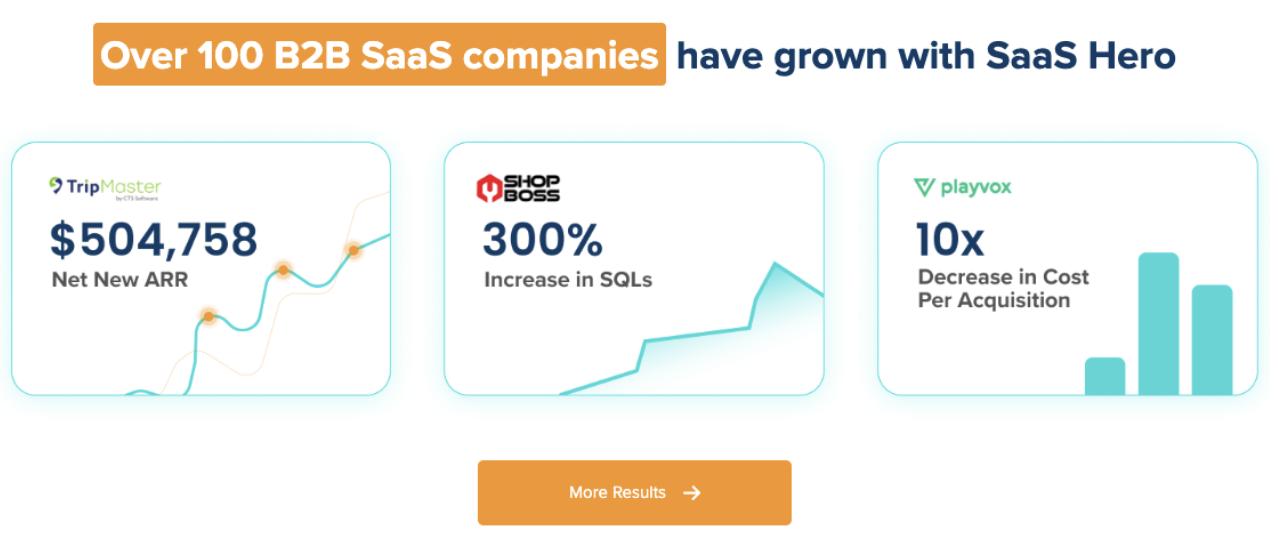
Audit-driven optimizations from SaaSHero deliver measurable results. Playvox achieved a 10x decrease in cost per lead. TestGorilla reached an 80-day CAC payback period that supported their $70M Series A. TripMaster generated $504,758 in Net New ARR with 650% ROI. These outcomes highlight the impact of SaaS-specific audit methodology compared with generic agency approaches.

Frequently Asked Questions
DIY Google Ads Audit vs. Hiring an Agency
DIY audits using free tools can uncover obvious issues but rarely capture complex SaaS attribution gaps or nuanced competitor strategies. Professional audits cost $1,000 to $2,000 and typically uncover 25-40% budget waste that self-audits miss. For accounts spending $10,000 or more each month, the audit investment usually pays for itself within weeks through waste reduction and conversion rate gains.
Timeline for a Comprehensive Google Ads Audit
A thorough B2B SaaS Google Ads audit usually takes 1-2 weeks. This window covers account structure review, search terms analysis, conversion tracking verification, landing page evaluation, and revenue attribution setup. Rush audits often miss issues like offline conversion tracking gaps or competitor campaign opportunities that materially affect performance.
SaaS-Specific Tools for Google Ads Audits
Core tools include HubSpot or Salesforce for CRM integration, Google Ads Editor for bulk changes, Looker Studio for revenue dashboards, and Google Tag Manager for Enhanced Conversions setup. SaaS companies also benefit from GCLID tracking that connects ad clicks to closed-won deals months later, which enables true revenue attribution.
Recommended Audit Frequency for B2B SaaS
Run comprehensive audits quarterly or after major account changes such as agency transitions, budget jumps, or new campaign launches. Use monthly mini-audits focused on search terms reports and negative keyword updates to prevent waste buildup. Reserve annual strategic audits for deeper reviews of account architecture, attribution models, and competitive landscape shifts.
What SaaSHero’s Audit and Management Pricing Covers
SaaSHero’s flat monthly retainers include comprehensive account audits, ongoing optimization, CRM integration setup, competitor campaign management, landing page optimization, and dedicated account management. Unlike percentage-of-spend models, this pricing structure aligns with your success instead of your budget size. Setup fees cover the initial audit, tracking implementation, and strategy development.
Conclusion: Turn Google Ads Into Predictable SaaS Growth
A comprehensive Google Ads management audit gives B2B SaaS companies a clear path through rising CPCs and intense competition. This 10-step checklist targets the most common waste sources, including weak account structure, thin negative keyword coverage, broken conversion tracking, and misaligned landing pages. By centering your efforts on revenue attribution instead of vanity metrics, you can reclaim 25-40% of wasted spend and build sustainable growth.
The audit process also reveals whether your current agency prioritizes your success or their fees. With disciplined implementation of these strategies, you can reach 80-day CAC payback periods and 3-5x ROAS that support durable SaaS expansion.
Start your comprehensive audit today to transform your ad spend into predictable Net New ARR growth.