




Key Takeaways
- B2B SaaS buyer journeys now follow non-linear paths, with about 80% of research happening in the dark funnel through AI tools and peer reviews before sales engagement.
- Use a 7-step playbook that covers ICP forensics, journey mapping, high-intent channels like Google Ads and LinkedIn, competitor conquesting, CRO, metrics tracking, and strategic partnerships.
- Track core metrics such as 12–18 month CAC payback, 50% SQL-to-opportunity conversion, LTV:CAC at 4:1, and NRR at 111% for top-quartile performance.
- Run conquesting campaigns around competitor pricing, alternatives, and reviews, and send traffic to intent-specific landing pages that convert high-intent prospects efficiently.
- Scale faster by partnering with SaaSHero on month-to-month GTM execution; schedule a buyer journey audit to identify your biggest growth gaps.
Buyer Journey Framework and Revenue Metrics Dashboard
The modern B2B SaaS buyer journey moves across four non-linear stages: awareness through dark funnel research, consideration through competitor comparison, decision through pricing evaluation, and retention through expansion. Buyers usually need at least five touches across channels before they talk to sales, so coordinated campaigns across search, social, and outbound channels become critical for startup growth.
Your measurement framework should prioritize Net New ARR, Pipeline Value, and Sales Qualified Leads instead of surface-level metrics like impressions or clicks. As mentioned earlier, top performers still maintain the 111% NRR benchmark despite median compression to 101%, and you should maintain the 4:1 LTV:CAC target, with 3:1 as your absolute minimum for viable unit economics.
The following table highlights the key performance benchmarks to target at each stage of the buyer journey so you can align campaigns with revenue outcomes:
| Stage | Benchmark Metric | Startup Target |
|---|---|---|
| Awareness | 2–5% CTR | Track dark funnel intent |
| Consideration | 20% SQL rate | 50% SQL-to-opportunity |
| Decision | 650% ROI | 12–18mo CAC payback |
| Retention | 90%+ GRR | NRR 111% top quartile |
To measure these metrics accurately and manage CAC, you need reliable attribution infrastructure that connects marketing to revenue. Implement GCLID-to-CRM tracking so upstream ad impressions and clicks tie directly to pipeline and closed-won deals, including dark funnel influence that standard Google Analytics often misses. Download our SaaS GTM template with pre-built tracking frameworks, or schedule a call to tailor it to your funnel.
Step 1: ICP Forensics for High-Value Deals
Start by analyzing your last 20 closed-won deals to uncover patterns in job titles, company size, tech stack, and core pain points. Use CRM reports to find consistent traits across industry, size, tech stack, and buyer persona in past opportunities and wins. From this analysis, create three to five detailed personas with clear titles, responsibilities, and decision-making authority so your campaigns speak directly to real buyers.
SaaSHero’s senior-led approach keeps ICP analysis in the hands of experienced strategists instead of junior account managers. Schedule your ICP audit to pinpoint your highest-value buyer personas and segments.

Step 2: Journey Mapping Across Four Stages
Map buyer touchpoints across the four stages and focus on high-intent moments where prospects signal readiness to engage. In awareness, buyers browse LinkedIn and industry publications to gather context and understand the problem space. As they move into consideration, they search for “[competitor] alternatives” and read G2 reviews to narrow their shortlist.
During the decision stage, they compare pricing pages, evaluate feature gaps, and request demos. Because buyers cluster activity around these high-intent moments, you should limit your initial focus to one or two primary channels, usually Google Ads for high-intent search and LinkedIn for targeted outreach.
Checklist for Steps 1–2:
- Analyze 20+ closed deals for ICP patterns
- Define 3–5 buyer personas with decision authority
- Map the 4-stage journey with specific touchpoints
- Identify 1–2 primary acquisition channels
Step 3: High-Intent Channel Selection
Channel selection should concentrate on where high-intent buyers already spend time. Top channels for B2B SaaS include SEO-driven content, LinkedIn, email marketing, and paid search. For most startups, Google Ads captures high-intent searches, including competitor comparisons, while LinkedIn supports precise account-based outreach.
Protect your budget by using negative keywords so you avoid paying for low-intent navigational searches that only include competitor brand names. Once you establish your primary channels, you can focus on making them more efficient by targeting prospects already in-market and actively evaluating competitors.
Step 4: Competitor Conquesting Playbook
Competitor conquesting targets three core intent buckets: pricing intent with “[competitor] pricing,” problem intent with “[competitor] alternatives,” and validation intent with “[competitor] reviews.” Create dedicated landing pages for each intent type that feature pricing comparison tables, switching resources, and strong social proof. This approach uses competitor gaps to position your product as the stronger choice for buyers already researching options.
Build intent-specific pages that match the psychological state of each buyer type. For pricing intent, lead with clear total cost of ownership comparisons because these buyers already evaluate costs and want immediate value clarity. For problem intent, highlight common pain points with the competitor and show how your solution fixes them, since these buyers feel frustrated and actively seek alternatives.
For validation intent, showcase G2 badges, case studies, and customer testimonials because these buyers need social proof to reduce perceived risk. Add switching incentives such as free migrations or contract buyouts to remove practical barriers that might block conversion even after buyers feel convinced. Here is how to structure each landing page type so it aligns with the specific intent and moves prospects toward a demo or trial.

The conquesting strategy requires expertise in legal compliance, message matching, and conversion-focused design. Get your conquesting playbook to launch compliant landing pages and targeted campaigns that capture competitor traffic.
Step 5: Conversion Rate Optimization on Key Pages
Focus CRO efforts on high-impact pages before running expensive A/B tests. Run five-second tests to confirm that visitors can immediately understand your value proposition. Place trust signals such as security badges, compliance logos, and recognizable customer logos above the fold so visitors feel safe engaging with your product.
Use action-oriented CTAs like “Get Demo” or “Start Free Trial” instead of vague “Learn More” buttons. These changes create a clearer path to conversion and help you convert existing traffic before you scale spend.
Optimization Checklist:
- Run five-second value proposition tests
- Place trust signals above the fold
- Use clear, action-focused CTAs
Step 6: Metrics and Iteration Rhythm
Establish weekly reporting dashboards in Looker Studio or HubSpot that track Net New ARR, Pipeline Value, and SQL conversion rates. Set pipeline stages in your CRM to mirror real sales activities such as discovery calls, demos, proposals, and negotiations so reporting reflects reality. Avoid vanity metrics that fail to connect with revenue growth.
Once you have accurate pipeline data, use it to create feedback loops between marketing and sales through shared dashboards and weekly alignment calls. Track leading indicators like demo-to-close rates and average deal size alongside lagging indicators such as MRR growth so your team can adjust campaigns before problems show up in revenue.
SaaSHero offers month-to-month CRO and analytics support with Slack integration for fast feedback and iteration. Request a conversion audit to receive a prioritized optimization roadmap and reporting setup.
Step 7: Scaling with Strategic Agency Partnerships
Evaluate your readiness to scale by reviewing CAC payback periods, SQL conversion rates, and internal bandwidth. Most teams fall into one of three scenarios: an overwhelmed founder managing ads on weekends, a frustrated VP stuck with vanity-metric agencies, or a post-funding team that needs immediate, reliable scale.
Strategic partnerships help when internal resources feel stretched or when you need specialized skills that are hard to hire quickly. Look for partners that offer month-to-month agreements, flat-fee pricing, and reporting tied directly to revenue. Avoid agencies that push long-term contracts or percentage-of-spend models that reward higher ad spend instead of better results.
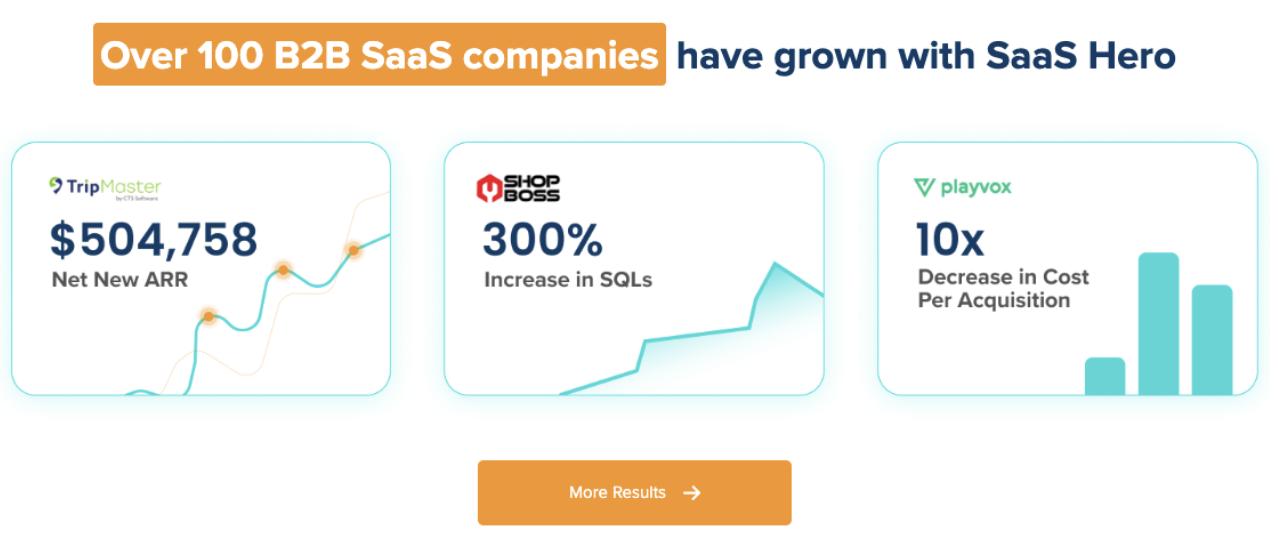
To illustrate what the right partnership can unlock, consider three SaaS companies that scaled with specialized agencies. TestGorilla reached an 80-day CAC payback and raised a $70M Series A. TripMaster added $504k in Net New ARR within 12 months. Leasecake secured a $3M VC round after rolling out focused LinkedIn campaigns.

The most effective partners behave like extensions of your team rather than distant vendors. They join your communication channels, understand your industry benchmarks, and align with the same KPIs that matter to your board and investors.
FAQ
What is the best SaaS GTM template for startups?
The most effective GTM template covers ICP forensics, buyer journey mapping, channel selection, competitor conquesting, conversion optimization, metrics tracking, and strategic partnerships. Focus on one or two primary channels at first, use revenue-first metrics, and keep month-to-month flexibility so you can adjust quickly based on performance data.
Which channels work best for B2B SaaS startups?
Google Ads and LinkedIn usually deliver the highest ROI for B2B SaaS startups. Google captures high-intent searches, including competitor comparisons, while LinkedIn targets decision-makers by job title and company size. Content marketing and email nurturing support both channels by educating buyers during longer sales cycles.
How can startups fix high customer acquisition costs?
High CAC often comes from broad keyword targeting, weak landing page conversion, or misaligned sales processes. Use negative keyword strategies, build intent-specific landing pages, and focus on SQL quality instead of raw lead volume. Capture high-intent prospects already evaluating solutions through competitor conquesting and track how dark funnel activity influences deals.
What metrics should B2B SaaS startups track weekly?
Track Net New ARR, Pipeline Value, SQL conversion rates, CAC payback period, and LTV:CAC ratio each week. Avoid vanity metrics like impressions or clicks that do not tie to revenue. Set up CRM tracking that connects ad clicks to closed-won deals so you can make confident optimization decisions.
When should startups partner with a specialized agency?
Consider partnering when internal bandwidth feels limited, when you need specialized skills, or when you must scale quickly after funding. Choose agencies that work on month-to-month terms, use flat-fee pricing, and report on revenue-focused metrics. The right partner should plug into your team communication and optimize for the same outcomes your investors expect.
Start your buyer journey overhaul with SaaSHero’s proven frameworks and specialized SaaS expertise.