




Key Takeaways
- Poor B2B SaaS landing pages convert only 1-3% of visitors, which inflates CAC and stretches payback periods.
- SaaSHero’s 7-step framework delivers 20%+ conversion lifts through heuristic audits, hero section improvements, and ARR-focused social proof.
- Transparent pricing TCO tables and frictionless CTAs can boost qualified leads by 20% and form completions by 18%.
- Mobile and AI personalization improvements reduce bounce rates and drive 12%+ gains in mobile conversions.
- Track Net New ARR attribution for sub-90-day payback, and schedule a SaaSHero discovery call for expert implementation support.
Set Up Tools and Metrics Before You Optimize
Establish tracking infrastructure before you change any landing pages. Use Google Analytics 4 for traffic analysis, Hotjar or similar heatmap tools for behavior insights, and CRM integration with HubSpot or Salesforce for ARR attribution. Connect ad clicks (GCLID) through landing pages to closed revenue so every test ties back to ARR.
Lock in baseline metrics such as Net New ARR tracking, CAC payback periods under 90 days, and SQL conversion rates above 10%. Average B2B SaaS conversion rates stand at 1.1%, and mobile bounce rates often exceed 60%. Document these numbers before you launch any optimization work.
Plan 2-4 weeks for meaningful conversion improvements. The main risk comes from skipping heuristic analysis and jumping straight into A/B tests, which burns time and budget on low-impact changes.
SaaSHero’s 7-Step Framework for High-Converting B2B SaaS Landing Pages
|
Step |
Action |
Projected Lift |
|
1 |
Heuristic CRO Audit |
+10% conversion |
|
2 |
Hero Section ARR Value Prop |
+15% conversion |
|
3 |
Competitor Conquest Pages |
+30% CAC reduction |
|
4 |
ARR-Focused Social Proof |
+25% trust signals |
|
5 |
Transparent Pricing TCO |
+20% qualified leads |
|
6 |
Frictionless Demo CTAs |
+18% form completion |
|
7 |
Mobile/AI Optimization |
+12% mobile conversion |
This framework targets the main conversion killers: unclear value, weak trust, opaque pricing, and mobile friction. Each step builds on the last, so improvements compound and create measurable ARR growth.
Step 1: Run a Heuristic CRO Audit With Three Reviewers
Start with a structured heuristic analysis using three independent evaluators. SaaSHero’s audit framework evaluates four dimensions: Relevance, Clarity, Trust, and Friction. Check whether the page matches ad copy, passes a 5-second comprehension test, shows clear credibility, and avoids unnecessary complexity.
Document specific issues such as mismatched headlines, buried value propositions, or too many form fields. Use this qualitative review to identify quick wins before you pay for more traffic. Focus first on headline clarity, CTA visibility, and placement of trust signals above the fold.
Step 2: Rewrite the Hero Section Around ARR Outcomes
Redesign the hero section so visitors understand the value in five seconds. Anchor the main message in ARR-focused outcomes. Replace vague claims like “streamline operations” with specific results such as “Cut CAC by 30%” or “Reach 80-day payback periods.” Add a clear primary CTA and a visual that shows the core product workflow.

Place social proof near the main CTA to reduce anxiety. Use G2 badges, customer logos, or short proof statements. The hero must answer “What is this?” and “Why should I care?” within the first screen.
Step 3: Build Competitor Conquest Landing Pages by Intent
Create dedicated landing pages that target competitor-focused search intent. Segment pages by psychological intent, including pricing comparisons ([Competitor] pricing), problem-solving ([Competitor] alternatives), and validation ([Competitor] reviews). Match the content and proof to each intent type.
Lead pricing-intent pages with clear TCO comparisons. For problem-intent pages, highlight known competitor gaps and support claims with case studies from customers who switched. Use competitor names only in factual comparisons, add proper disclaimers, and clearly identify your brand as the advertiser.
Step 4: Add ARR-Focused Testimonials and Micro Case Studies
Replace generic testimonials with quantified customer stories. Micro-case studies integrated into landing page flow drive 3x higher conversion rates. Include ARR figures, growth percentages, and timeframes so prospects see concrete outcomes.
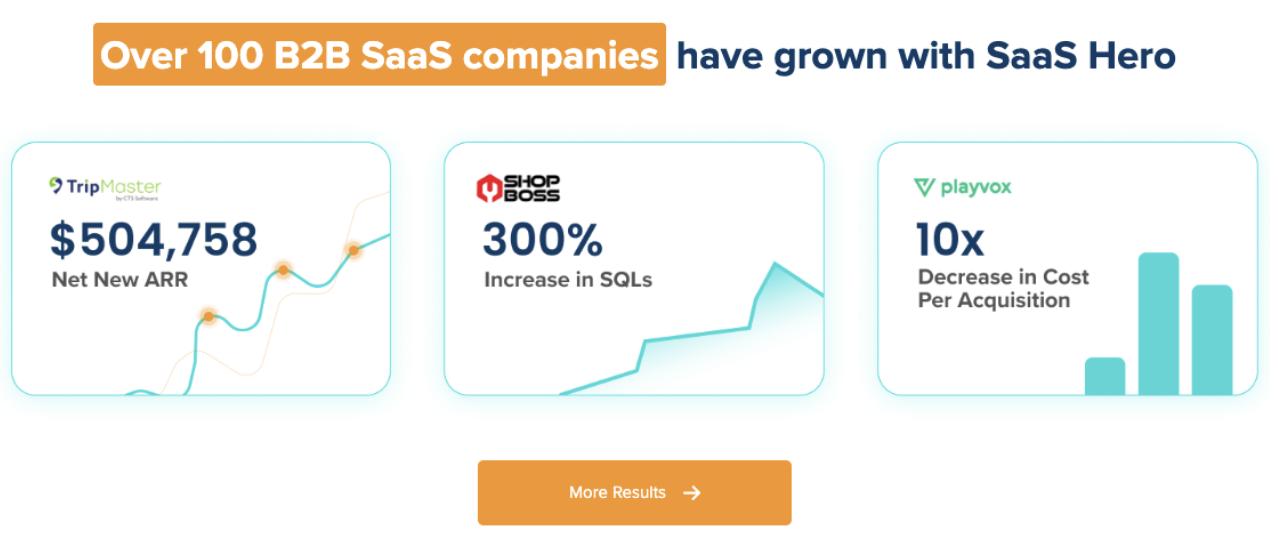
Use a simple structure for each story: problem, solution, and result. For example, “TripMaster needed to accelerate growth, implemented landing page optimizations, and generated $504,758 in Net New ARR.” Spread these stories across the page instead of stacking them only at the bottom.

Step 5: Use Transparent Pricing and TCO Comparison Tables
Introduce pricing transparency to reduce friction with sales. B2B SaaS pricing pages with transparent pricing convert 4.6% of visitors to form submissions. Build comparison tables that show total cost of ownership against key competitors.
Organize pricing tables with clear tiers, feature lists, and simple ROI calculations. Include implementation, training, and support costs so prospects see the full picture. This clarity builds trust and filters out poor-fit leads early.
Step 6: Simplify CTAs for Frictionless Demo Booking
Streamline the path to conversion by trimming form fields and explaining what happens next. Removing top menu bars from demo booking pages improves conversion rates by 2.3% because it removes distractions. Use action-focused CTA copy such as “Get Your Custom Demo” instead of “Submit.”
Place your primary CTA above the fold and repeat it at logical points on longer pages. Test exit-intent popups as a secondary capture method that does not interrupt the main flow.
Step 7: Improve Mobile Experience and Test AI Personalization
Prioritize mobile performance because even a 1-second delay can cut conversions by 20%. Use responsive layouts, touch-friendly CTAs, and simplified menus. NRR of 115-120% comes from AI personalization in SaaS, which supports dynamic content based on behavior and company data.
Test AI-powered personalization for segments such as industry, company size, or funnel stage. Adjust value props, case studies, and pricing emphasis based on firmographic data to increase relevance and conversion rates.
When you are ready to roll out these changes with expert support, book a discovery call to plug into SaaSHero’s framework and accelerate ARR growth.
Measure Landing Page Success With ARR and Payback
Connect landing page performance directly to revenue outcomes. Track conversion rate lifts of 20% or more and aim for CAC payback periods under 80 days. Use GCLID-to-CRM tracking so you can attribute closed revenue to specific campaigns and landing page variants.
Combine Google Analytics 4 with HubSpot multi-touch attribution to see the full journey. Watch leading indicators such as demo bookings, SQL conversion, and pipeline velocity, along with lagging metrics like closed-won revenue and customer lifetime value.
Run bi-weekly reviews that compare pre- and post-optimization performance. Benchmark against SaaSHero client results that show 650% ROI and 20% conversion rates from optimized landing pages.

2026 Advanced Tactics: AI-Dynamic Pages and LinkedIn Conquest
Roll out advanced personalization with AI-driven dynamic content that adapts to behavior, company size, and industry. Test heuristic-based A/B variations first so you confirm winners before scaling AI-driven experiences.
Extend conquest strategies into LinkedIn ads with job title and company targeting. Build industry-specific landing pages that address vertical pain points and highlight relevant case studies to lift conversions.
Scale winning experiments with SaaSHero’s full-stack support across copy, design, and analytics. Book a discovery call to implement these advanced tactics with a dedicated team.
Checklist and Next Steps for ARR-Focused Growth
Complete your landing page audit using the 7-step framework. Work through heuristic analysis, hero updates, competitor pages, ARR testimonials, pricing transparency, CTA simplification, and mobile improvements. Tackle quick wins from the audit before you launch complex A/B tests.
Start tracking Net New ARR attribution and confirm your baseline conversion metrics. Roll out changes in a structured sequence and measure impact before you move to the next phase.
To accelerate results with experienced support, book a SaaSHero discovery call and apply proven frameworks that drive measurable ARR growth.
FAQs: B2B SaaS Landing Page Optimization for ARR
How long does it take to see ARR lift from landing page optimization?
Most B2B SaaS teams see early conversion gains within 2-4 weeks after they implement systematic changes. ARR impact usually appears within 4-8 weeks as optimized traffic moves through the sales cycle. Companies like TestGorilla reached 80-day payback periods with comprehensive landing page and campaign optimization, which shows how quickly strong programs can pay off.
Should I optimize landing pages myself or work with specialists like SaaSHero?
Basic improvements can happen in-house, but specialized agencies bring tested playbooks and help you avoid expensive missteps. SaaSHero’s flat-fee model starting at $1,250 per month gives you access to senior strategists who understand CAC, LTV, churn, and ARR. Their clients have raised more than $70M and generated millions in Net New ARR through systematic optimization, which supports the case for expert help over DIY efforts.
What are the biggest mobile optimization risks for B2B SaaS in 2026?
Mobile performance issues block conversions as decision-makers research more on phones. Key risks include slow load times, non-responsive forms, and clumsy navigation. B2B buyers often start research on mobile and finish on desktop, so mobile experience affects the entire funnel, not just final form fills.
How do I scale landing page optimization with $50K+ monthly ad spend?
High ad spend requires a structured testing roadmap and dedicated optimization resources. Build separate landing pages for each campaign type, audience segment, and conquest strategy. Use advanced attribution to connect every dollar of ad spend to closed revenue. Many companies partner with specialists who can manage complex programs while protecting performance across channels.
What conversion rate improvements should I expect from systematic optimization?
Well-run landing page optimization often delivers 20-50% conversion lifts within 90 days. The exact gain depends on your starting point and how deep you go with changes. Teams starting below 2% conversion usually see the biggest jumps, while those already above 5% still gain meaningful improvements. Keep your primary focus on ARR impact and qualified pipeline, not just raw conversion percentages.