





Written by: Aaron Rovner, Founder, Saas Hero
Key Takeaways
- B2B SaaS CAC has risen 40–60% with a 15‑month median payback, which forces tradeoffs between near-term revenue and long-term brand equity.
- Performance marketing delivers immediate ROAS but risks ad fatigue and rising costs, while brand marketing builds durable trust without quick, clean attribution.
- Balanced blends around 60/40 performance to brand often lift ROAS 2–3x, with allocations shifting from about 80/20 at bootstrap to 40/60 at enterprise scale.
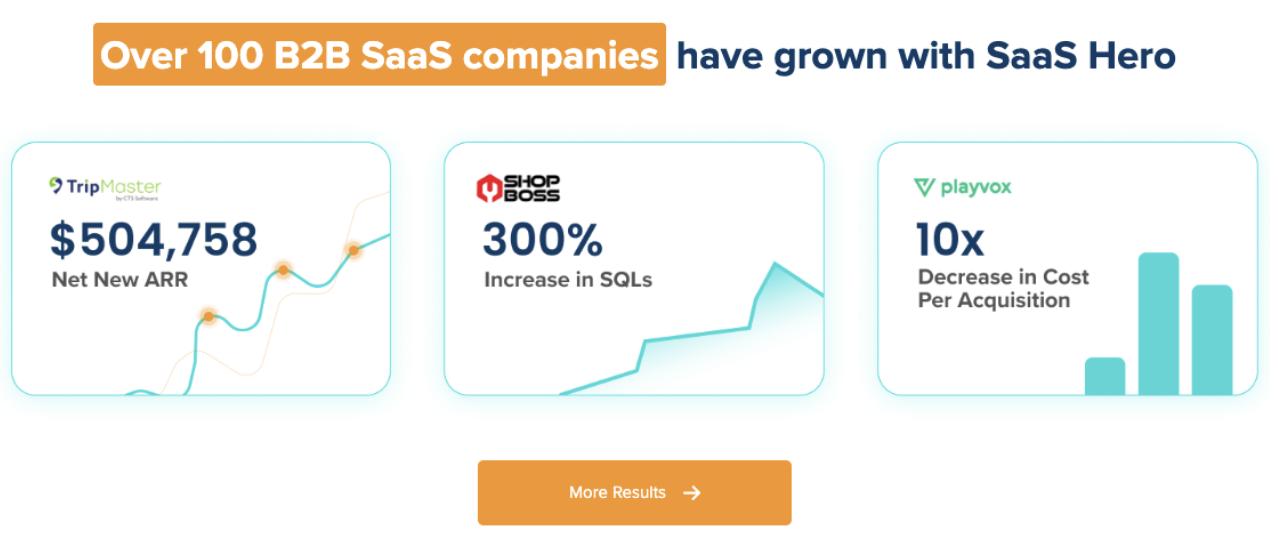
- SaaSHero case studies such as TripMaster ($504K Net New ARR, 650% ROI) and Playvox (10x CPL reduction) show that coordinated blends drive measurable growth.
- Multi-touch attribution and incrementality testing keep measurement honest, so schedule a discovery call with SaaSHero to tune your mix with revenue as the north star.
Core Differences: How Performance and Brand Marketing Shape the SaaS Funnel
Performance marketing and brand marketing play different roles in the B2B SaaS buyer journey. Performance marketing targets high-intent prospects who already search for solutions, using tactics like competitor conquesting and pricing comparison campaigns. First Page Sage’s analysis of about 120 B2B companies found organic email marketing delivers $510 CAC, while organic social media marketing costs $658 CAC, which highlights the efficiency gap between channels.

Brand marketing operates in the “dark funnel” where prospects research independently before they talk with sales. The Ehrenberg-Bass Institute’s 95:5 rule shows that only 5% of B2B buyers are in-market at any time. Brand building keeps your product top of mind for the 95% who will buy later.
Performance Marketing Advantages:
- Drives immediate revenue, as companies like TestGorilla reached 80-day payback periods.
- Targets high-intent keywords and competitor audiences with precision.
- Connects spend to closed deals through clear attribution paths.
- Enables rapid testing, creative iteration, and bid adjustments.
Performance Marketing Risks:
- Creates ad fatigue and rising costs over time.
- Relies heavily on platform algorithms and policy decisions.
- Reaches only prospects who already search for a solution.
- Invites expensive bidding wars in crowded categories.
Brand Marketing Advantages:
- Improves conversion rates because known brands beat unknown competitors in head-to-head comparisons.
- Can reduce customer acquisition costs by 30–50% through trust and recognition.
- Compounds over time as content, reputation, and community build on each other.
- Protects against competitors by strengthening loyalty and preference.
Brand Marketing Risks:
- Makes direct attribution to immediate revenue difficult.
- Requires longer time horizons before results appear in pipeline.
- Encourages vanity metrics when teams lack revenue-focused goals.
- Demands higher upfront investment with uncertain timing of returns.
The key insight is clear. Performance marketing captures existing demand, while brand marketing creates future demand that converts more efficiently. See how SaaSHero’s revenue-first tracking ties both approaches directly to ARR growth.
Understanding these core differences matters, yet theory alone does not prevent costly mistakes. Many B2B SaaS teams still over-index on one side and stall growth. The next section breaks down what happens when each strategy runs without balance.
Problem Deep Dive: When Each Strategy Fails in the SaaS Journey
Performance Marketing Pitfalls: High-Intent Wins with Hidden Long-Term Costs
Pure performance marketing often creates growth that looks strong on dashboards but weakens over time. Competitor conquesting and high-intent keyword targeting can generate immediate leads, yet acquisition costs have surged in competitive markets, and companies that rely only on paid channels feel the steepest increases. These teams face escalating costs, ad fatigue, and constant exposure to algorithm shifts.
The attribution trap deepens the problem. Performance channels often receive last-click credit for conversions that brand touchpoints influenced earlier in the journey. Analyses of B2B SaaS attribution setups show that last-click models usually credit paid search with most revenue, while time-decay models reveal stronger influence from organic content, product trials, and nurture programs.
Brand Marketing Traps: Awareness That Never Reaches Pipeline
Brand-heavy strategies can strain cash flow for growth-stage SaaS companies. Content marketing, thought leadership, and awareness campaigns often drive impressive engagement metrics without clear impact on pipeline or ARR. The dark funnel means prospects read content, attend webinars, and follow your brand without obvious links to eventual deals.
This pattern pushes teams toward vanity metrics such as page views, social shares, and mentions, while revenue teams still miss ARR targets. 2025 benchmarks show median ARR growth for B2B SaaS companies at 26%, with top performers at 50%. That gap reflects how well top performers connect brand activity to revenue outcomes.
Bootstrap companies often allocate about 80–90% of spend to performance and 10–20% to brand. Enterprise companies frequently invert that mix to around 40% performance and 60% brand. This progression illustrates how the balance shifts as companies move from survival to market leadership, and it sets up the budget frameworks covered later in the solution section.
Companies like Playvox achieved a 10x decrease in cost per lead by restructuring their accounts to eliminate waste while scaling volume by 163%. See how SaaSHero’s account restructuring methodology can remove waste in your campaigns while scaling high-performing segments.

The Solution: 60/40 Blends and Budget Plans That Compound ARR
High-performing B2B SaaS companies in 2026 do not choose between performance and brand marketing. They design a coordinated system where each supports the other. Research shows that strong brand building can lift performance ROAS by 2–3x, while performance channels supply the near-term cash flow that funds brand investments.
This synergy works through multiple mechanisms that reinforce each other. Brand activities such as G2 reviews, case studies, and thought leadership content increase conversion rates for performance campaigns by building trust and reducing friction. Higher conversion rates mean performance channels generate more revenue from the same ad spend, and that extra revenue can flow back into brand-building initiatives. Over time this creates a self-reinforcing growth engine where every dollar invested in brand makes performance more efficient, which then generates more cash to reinvest.
ALM Corp’s 2026 guide recommends an average 60/40 split, with 60% allocated to owned and organic channels for long-term asset building and 40% to paid channels for immediate traffic and conversions. Actual allocations should still flex based on stage, capital, and competitive intensity.
Here is how that philosophy translates into practical budget allocation at different monthly spend levels:
| Monthly Budget | Performance Allocation | Brand Allocation | Strategic Focus |
|---|---|---|---|
| $10k | $8k (80%) | $2k (20%) | Competitor conquesting plus foundational content assets |
| $25k | $15k (60%) | $10k (40%) | Multi-channel performance with consistent thought leadership |
| $50k+ | $20k (40%) | $30k (60%) | Brand-led growth supported by performance amplification |
These budget frameworks show how companies can scale their blend in a structured way. AI-driven automation now enables hyper-personalization across both performance and brand touchpoints. At the same time, Answer Engine Optimization (AEO) requires content strategies that support both brand building and performance capture.
Partner with an agency whose incentives align with your revenue growth, not ad spend volume, and then explore SaaSHero’s flat-rate model to put that alignment into practice.

Proof: SaaSHero Case Studies That Turn Spend into ARR
Real-world results show how a blended strategy outperforms isolated tactics. SaaSHero clients combine immediate revenue generation with long-term brand building to create compounding ARR.
TripMaster (Transit Software): Generated $504,758 in Net New ARR with 650% ROI and 20% conversion rates from paid search. The strategy paired aggressive competitor conquesting with thought leadership content that positioned TripMaster as the category authority. As brand recognition grew, performance campaigns converted more efficiently.

TestGorilla (HR Tech): Reached 80-day payback periods and supported a $70M Series A round by scaling performance channels while holding strict efficiency targets. The team combined immediate lead generation with educational content about skills-based hiring, which built both short-term revenue and long-term category leadership.
Playvox (CX Software): The account restructuring mentioned earlier delivered a 10x CPL decrease and 163% volume growth through systematic negative keyword optimization and competitor comparison content. This approach captured high-intent traffic more efficiently and reinvested savings into winning segments.
Together these results show that the performance versus brand debate creates a false choice. Leading B2B SaaS companies use performance channels to capture existing demand while they build brand assets that create future demand and lift conversion rates across every channel.
Apply these same optimization strategies to your marketing mix and schedule a discovery call to identify your highest-leverage opportunities.
Measurement Frameworks and Attribution Challenges for 2026
Accurate measurement and attribution sit at the center of any effective performance and brand blend. Closing a B2B deal typically requires 8 to 15 touchpoints, and buyers complete most research before they talk with sales. Last-click attribution cannot capture this complexity and usually misses the real drivers of revenue.
Key attribution challenges in 2026 include incomplete offline data, cross-device fragmentation, attribution window bias, and privacy constraints from third-party cookie deprecation. These gaps often over-credit performance channels and under-value brand-building work.
Successful B2B SaaS companies respond with multi-layered measurement systems that mix quantitative models and qualitative insight. Effective frameworks include first-touch tracking, self-reported attribution on sign-up, content engagement tracking before conversion, and structured sales feedback. Each method fills a different blind spot, and together they provide a more complete view of the journey.
The priority is business outcomes, not perfect attribution math. Companies should track Net Revenue Retention, CAC payback, and pipeline coverage instead of obsessing over clicks and impressions. These metrics connect marketing decisions directly to predictable ARR growth.
Advanced teams also run incrementality testing alongside attribution models to validate channel impact. They use geo-based holdout experiments and controlled budget shifts to separate correlation from true causal lift. This approach ensures that marketing investments create real business growth instead of just moving credit between channels.
Conclusion: Blend Performance and Brand to Compound ARR
Sustainable B2B SaaS growth requires both immediate revenue and long-term brand strength. Companies that master a strategic blend, often near 60/40 or 50/50 depending on stage, consistently outperform those that lean on a single approach.
The brand awareness advantage discussed earlier, which includes higher conversion rates and lower acquisition costs, becomes even more powerful when paired with performance channels that capture in-market demand. Performance spend then funds further brand investments, and the cycle repeats with greater efficiency.
Success depends on more than budget splits. Teams need sharp execution, robust attribution frameworks, and continuous optimization based on revenue metrics instead of vanity numbers. Book a discovery call with SaaSHero to turn your marketing mix into a predictable revenue engine.
Frequently Asked Questions
What is the optimal performance versus brand marketing split for B2B SaaS companies?
The optimal split depends on company stage and capital. Bootstrap and seed-stage teams usually allocate 80–90% to performance for immediate revenue, with 10–20% reserved for foundational brand work. Scaling companies often shift toward 50–60% performance and 40–50% brand. Mature enterprise companies frequently move to about 40% performance and 60% brand to protect market leadership and reduce acquisition costs through strong equity.
How do you measure the ROI of brand marketing in B2B SaaS?
Brand ROI requires multi-touch attribution and longer measurement windows. Useful metrics include assisted pipeline value, brand lift survey results, organic search volume for branded terms, and conversion rate improvements across channels. Many successful companies also run incrementality tests with geo-based holdouts to isolate brand campaigns’ true impact on revenue and acquisition efficiency.
Can performance marketing work without brand marketing for SaaS companies?
Performance marketing can drive quick wins, yet it becomes more expensive and less effective without brand support. Companies that rely only on performance channels face rising costs, ad fatigue, and constant bidding pressure. Brand marketing acts as a multiplier by improving conversion rates and lowering acquisition costs across performance channels through trust and recognition.
What are the biggest attribution challenges when blending performance and brand marketing?
Major challenges include cross-device tracking gaps, long sales cycles with many touchpoints, the dark funnel where prospects research alone, and privacy rules that limit data collection. Most companies address these issues with multi-touch attribution models, self-reported attribution surveys, and structured feedback from sales to capture the full journey.
How has AI changed the performance versus brand marketing landscape in 2026?
AI now powers hyper-personalization across performance and brand touchpoints, automates campaign optimization based on real-time behavior, and improves attribution modeling with machine learning. AI also drives Answer Engine Optimization, which requires content that serves both immediate demand capture and long-term brand building at the same time.