




Last updated: January 19, 2026
Key Takeaways
- B2B SaaS CAC has risen 20-30% in 2026, with social ads at $937 and PPC at $619 per acquisition, so refine targeting using ICP, ABM, and negative keywords to cut waste by 20-50%.
- Improve landing pages with A/B testing and CRO to lift conversion rates from 2-5% to 20%+, which reduces effective CAC through better traffic efficiency.
- Shift to revenue metrics like net new ARR and LTV:CAC ratios instead of vanity metrics, then reallocate budgets to high-performing channels for 15-25% CAC reductions.
- Run competitor conquesting on high-intent keywords like pricing and alternatives, paired with comparison landing pages, to capture ready-to-buy prospects.
- Partner with SaaSHero’s flat retainer, month-to-month model for aligned incentives and proven results like 650% ROI; schedule a discovery call to audit your CAC today.
5 Proven Strategies to Reduce B2B Advertising Agency Customer Acquisition Costs in 2026
1. Cut Waste with Precise ICP Targeting and Negative Keywords
Broad targeting campaigns burn budget on unqualified prospects and low-intent traffic. Account-based advertising with partner channels boosts engagement by 72% and win rates by 60% compared to generic approaches.
Use these targeting refinements:
- Define your Ideal Customer Profile (ICP) using firmographic data such as company size, industry, technology stack, and growth stage.
- Deploy negative keywords aggressively to filter navigational searches and irrelevant traffic.
- Create audience segments based on intent signals like pricing searches, competitor comparisons, and feature-specific queries.
- Use LinkedIn’s matched audiences to reach specific job titles and curated company lists.
Strong negative keyword hygiene alone can reduce cost per lead by 20-50%. Focus on excluding brand-only searches where users want login pages rather than evaluating solutions. This precise targeting ensures every dollar reaches prospects who actively evaluate your category.
Book a discovery call to review your current targeting strategy and uncover wasted spend in your campaigns.
2. Lift Conversion Rates with Focused Landing Page Testing
Efficient conversion of paid traffic reduces effective CAC by improving the denominator in your cost-per-acquisition calculation. Optimized landing pages can reduce cost per lead by 61% compared to generic approaches.
Run systematic conversion rate optimization with clear tests:
- Run 5-second tests so visitors understand your value proposition immediately.
- Cut form fields to only the information sales truly need.
- Place trust signals such as G2 badges and customer logos above the fold.
- Match ad copy language directly with landing page headlines.
- Test different call-to-action buttons, such as “Get Demo” versus “Start Free Trial.”
B2B conversion rates usually sit between 2-5%. Companies that reach 20%+ conversion through structured testing can keep profitable unit economics even with higher CPCs. Remove friction, simplify the path to action, and avoid cluttering pages with extra features that distract buyers.

3. Tie Paid Media to Revenue with Net New ARR and LTV:CAC
Traditional agencies highlight clicks, impressions, and CTR while ignoring revenue impact. Companies tracking CAC by individual channels using UTM parameters achieve 15-25% CAC reduction by reallocating budgets to cost-effective sources.
Build revenue-focused tracking across your stack:
- Connect Google Ads to your CRM using GCLID tracking for closed-loop attribution.
- Track net new ARR instead of total pipeline value.
- Measure SQL (Sales Qualified Lead) conversion rates by channel.
- Calculate true CAC payback periods using gross margin data.
- Monitor LTV:CAC ratios for each acquisition source.
This approach shows which campaigns create real customers instead of inflating vanity metrics. Agencies aligned with revenue outcomes focus on business growth and profitability, not platform metrics that look impressive but fail to support sustainable unit economics.
4. Capture High-Intent Buyers with Competitor Conquesting
Users who search for competitor pricing, alternatives, or reviews show strong purchase intent. These prospects actively compare solutions and often feel frustrated with current tools, which makes them ideal candidates for switching.
Launch structured competitor campaigns with clear intent buckets:
- Target pricing-intent keywords such as “[Competitor] pricing” and “how much does [Competitor] cost.”
- Capture problem-intent searches like “[Competitor] alternatives” and “cancel [Competitor].”
- Create dedicated comparison landing pages with clear feature matrices.
- Highlight switching incentives such as free migration or contract buyouts.
- Use negative keywords and careful copy to avoid trademark violations.
Competitor conquesting works best with legal review and a tight message match on landing pages. Users who search competitor pricing expect immediate cost comparisons and clear tradeoffs, not generic product overviews. This strategy captures existing demand instead of spending heavily to create new awareness.
5. Lower CAC with a Revenue-Aligned B2B Agency Partner
The largest CAC improvements often come from choosing an agency partner whose incentives match your growth goals. Traditional percentage-of-spend models create conflicts of interest because they reward higher budgets regardless of efficiency.
SaaSHero’s flat retainer structure removes that misalignment and keeps focus on results:
|
Monthly Ad Spend |
1 Channel (M2M) |
2 Channels |
3+ Channels |
|
Up to $10k |
$1,250 |
$2,500 |
$3,750 |
|
$10k – $25k |
$1,750 |
$3,000 |
$4,250 |
|
$25k – $50k |
$2,250 |
$3,500 |
$4,750 |
|
$50k+ |
$3,250 |
$4,500 |
$5,750 |
Key differentiators include:
- Month-to-month contracts require re-earning your business every 30 days.
- Senior-led account management with a maximum of 8-10 clients per manager.
- Revenue-focused reporting on net new ARR and SQL conversion rates.
- B2B SaaS specialization across HR Tech, Logistics, and Cybersecurity verticals.
- Transparent pricing that removes any incentive to inflate ad spend.
Case study results support this model. TripMaster generated $504,758 in net new ARR with 650% ROI. TestGorilla reached an 80-day payback period that helped support their $70M Series A raise.

Book a discovery call to see how a revenue-aligned agency partnership can reduce your CAC while you scale.
Frequently Asked Questions on B2B Advertising Agency CAC
What is a good B2B SaaS CAC benchmark for 2026?
For B2B SaaS with $70 per month average revenue per account and 3% monthly churn, affordable CAC should stay under $280 per acquisition. The median LTV:CAC ratio of 3.6:1 provides a baseline, while top-performing companies reach ratios above 5:1 through organic channels. Enterprise SaaS can support higher CAC because of larger contract values, while SMB-focused companies need more efficient acquisition.
How should I calculate CAC when working with SaaSHero?
SaaSHero tracks true CAC by tying ad spend and agency fees directly to closed-won revenue in your CRM. The calculation includes total acquisition costs, which means ad spend, retainer fees, and internal resources, divided by net new customers acquired. This method reveals actual cost per customer instead of cost per lead and supports accurate LTV:CAC ratios and payback period analysis.
Which paid channels offer the best CAC efficiency in 2026?
LinkedIn delivers strong B2B performance at $200-250 cost per company influenced, with 113% positive ROAS compared to Google Search at 78%. Channel efficiency still depends on your ICP and buying process. Google Ads works well for high-intent searches, while LinkedIn reaches specific job titles and company sizes. The most effective mix usually combines both channels with strict negative keyword management.
Why choose month-to-month contracts over annual agency agreements?
Month-to-month agreements align agency incentives with client success because they require continuous performance validation. Annual contracts often create complacency after the initial setup period. SaaSHero’s month-to-month model builds accountability that drives ongoing optimization and responsiveness. This structure also gives you flexibility to adjust strategies as markets or business priorities change, without long-term contractual limits.
What LTV:CAC benchmarks should I target for sustainable growth?
Target LTV:CAC ratios above 3:1 for sustainable unit economics, with payback periods under 90 days to protect cash flow. Top-quartile SaaS companies often reach ratios above 5:1 through organic channels and product-led growth strategies. Companies that spend $2.82 to acquire $1 of new ARR usually struggle with profitability. Focus on retention and expansion revenue to increase LTV while you improve acquisition efficiency.
Conclusion: Use Revenue-Aligned Strategy to Slash CAC
Rising B2B advertising costs require a strategic response that goes beyond small optimizations. The five strategies in this guide create a clear framework:
- Refined targeting through ICP definition and negative keyword hygiene.
- Structured conversion rate optimization to improve traffic efficiency.
- Revenue-focused metrics that connect ad spend to real business outcomes.
- Competitor conquering to capture high-intent demand already in the market.
- Specialized agency partnerships with aligned incentive structures.
The most powerful shift often comes from choosing an agency partner who shares your growth objectives instead of maximizing their own fees. SaaSHero’s flat retainer model, month-to-month flexibility, and revenue-focused reporting provide a strong foundation for sustainable CAC reduction.
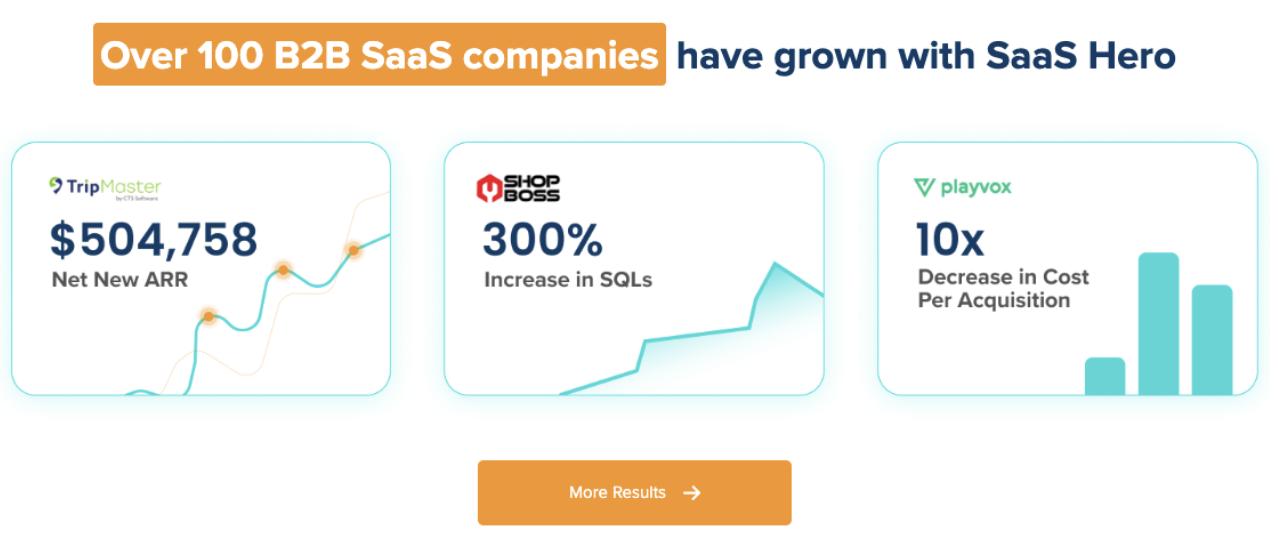
Companies that achieve 80-day payback periods and 650% ROI show that efficient growth remains possible even as platform costs rise. The advantage comes from working with specialists who understand B2B SaaS unit economics and prioritize long-term success over short-term vanity metrics.
Book a discovery call to audit your current CAC performance and build a focused strategy for your 2026 growth goals.