




Key Takeaways
- Define a precise ICP with job titles, firmographics, and behavioral signals to reach B2B decision-makers on Facebook.
- Layer audiences with demographics, interests, behaviors, and lookalikes while using Meta’s 2026 Advantage+ for AI-driven audience expansion.
- Use PAS messaging in mobile-first Reels videos with strong social proof to interrupt scrolling and capture high-intent leads.
- Run revenue-first optimization that tracks SQLs and ARR through CRM integration, and use retargeting to cut CPL by 40–60%.
- Scale winning campaigns with structured creative testing and budget increases, and book a discovery call with SaaSHero for 5–10x ROAS execution.
Core Setup You Need Before Running B2B Facebook Ads
Strong foundations protect your budget and speed up profitable results. Confirm these pieces before you scale spend.
- Meta Ads Manager access with Facebook pixel installed and firing conversion events
- CRM integration (HubSpot, Salesforce) to track leads through to closed-won revenue
- Clear ICP definition including job titles, company size, and industry verticals
- Attribution setup using 7-day view, 30-day click windows minimum for B2B sales cycles
Track CAC, LTV, ARR, and SQLs as your primary metrics. Expect 2–4 weeks before campaigns reach profitability, with an early focus on lead quality over volume. Attribution gaps create the biggest risk in complex B2B journeys, so accurate tracking prevents expensive blind spots.
Your 7-Step Facebook Ads Roadmap for B2B SaaS
This 7-step roadmap gives you a clear path to profitable B2B Facebook campaigns in 2026.
- Define your ICP with surgical precision
- Build granular audience layers
- Craft intent-based creative messaging
- Launch lead generation campaigns
- Set up behavioral retargeting sequences
- Optimize for revenue, not conversions
- Scale with systematic testing
This framework uses Meta’s 2026 Andromeda algorithm and GEM AI model updates, which prioritize creative-first targeting over manual audience selection. The Andromeda algorithm shifts to real-time, signal-driven optimization by analyzing creative elements and user behavior patterns at the same time.
|
Step |
Focus Area |
Common Pitfall |
2026 Update |
|
1 |
ICP Definition |
Too broad targeting |
AI-driven persona mapping |
|
2 |
Audience Building |
Single-layer targeting |
Advantage+ automation |
|
3 |
Creative Strategy |
Generic messaging |
GEM AI cross-platform learning |
|
4 |
Campaign Launch |
Desktop-first approach |
Mobile-native Reels priority |
7 Steps to Target B2B SaaS Buyers with Facebook Ads in 2026
Step 1: Lock In a Precise Ideal Customer Profile
Effective B2B Facebook campaigns start with a sharply defined ICP. Facebook needs layered signals to reach decision-makers, unlike LinkedIn’s direct job title targeting.
Core ICP Elements:
- Job titles: VP Marketing, CTO, Head of Sales, Director of Operations
- Behavioral signals: Business page admins, frequent B2B software engagement
- Firmographics: Company size of 10–500 employees for mid-market SaaS
- Interest indicators: SaaS tools, industry publications, competitor engagement
Example ICP: HR Tech selling to HR Directors at 50–200 employee companies who engage with HR software content and manage business pages.
Pro Tip: Avoid overly broad or narrow targeting; start with a 500K–2M audience size so Facebook’s algorithm has enough data to learn.
Step 2: Build a Layered Audience Targeting System
Modern targeting in 2026 blends demographic filters with AI-powered signals. Layer audiences by combining demographics with job titles, interests, and behaviors for precise reach.
Targeting Layer Strategy:
- Layer 1: Demographics such as age 25–55 and business-focused locations
- Layer 2: Job titles plus management interests
- Layer 3: Behavioral signals like B2B software buyers and business content engagement
- Layer 4: Lookalike audiences built from high-LTV customers
Advantage+ Integration: Meta’s 2026 updates make Advantage+ the default for audience expansion. Feed the algorithm strong seed audiences and allow the AI to find similar profiles at scale.
|
Targeting Type |
Examples |
Audience Size |
Best For |
|
Interest Layering |
SaaS + Management + Industry |
500K–1M |
Cold prospecting |
|
Lookalike (CRM) |
Top 10% customers |
2–5M |
Scaling winners |
|
Custom Upload |
Email list, phone numbers |
10K–100K |
Warm outreach |
|
Behavioral |
Business page admins |
1–3M |
Decision-maker focus |
Exclusion Strategy: Build negative audiences for existing customers, competitor employees, and consumer-focused profiles to avoid wasted spend.
Step 3: Use PAS Messaging That Stops the Scroll
B2B buyers on Facebook usually browse casually, not actively shopping. Your creative needs to interrupt that scroll with clear, pain-driven messaging.
Messaging Framework – Problem, Agitation, Solution (PAS):
- Problem: “Struggling with manual HR processes?”
- Agitation: “Your team wastes 10 hours per week on admin tasks.”
- Solution: “Our platform automates 80% of HR workflows.”
Creative Best Practices for 2026:
- Mobile-first design: Most Facebook users browse on mobile devices
- Video priority: The Reels format often delivers about 50% higher conversions
- Subtle conquesting: Call out competitor pain points without naming brands
- Social proof integration: Add customer logos and G2 badges
Creative is now the primary signal for Meta’s algorithm, so creative velocity matters. Refresh ads 2–4 times per month to avoid fatigue and keep performance strong.
Step 4: Launch High-Intent Lead Generation Campaigns
Facebook Lead Ads work well for B2B SaaS because they reduce friction on mobile. Prospects can request demos or trials without leaving Facebook or Instagram.
Lead Form Optimization:
- Minimal fields: Name, email, company, phone, with a maximum of four fields
- Clear value proposition: “Get a personalized demo in 15 minutes.”
- Mobile-optimized: Test every form on mobile devices first
- Instant follow-up: Connect forms to your CRM for immediate routing
Campaign Structure for 2026:
- Broad targeting campaigns: Allow Advantage+ to find your audience
- Creative-focused ad sets: Test messaging variations instead of splitting audiences
- Reels-first placement: Prioritize Instagram Reels and Facebook Reels
- Lead generation objective: Aim for lead quality rather than raw volume
2026 Update: Test Advantage+ Leads for better quality and sync with HubSpot for automatic lead import and custom audience updates.
Step 5: Build Behavioral Retargeting Sequences
Most B2B buyers need several touches before they convert. Retargeting often cuts cost per qualified lead by 40–60% compared with cold campaigns because it focuses on engaged prospects.
Retargeting Audience Segments:
- Video viewers: People who watched at least 75% of your videos
- Website visitors: Pricing and feature pages with 30 seconds or more on site
- Form abandoners: Users who started but did not complete lead forms
- Email engagers: Contacts who opened but did not click on recent campaigns
Sequential Messaging Strategy:
- Awareness: Problem-focused content such as blog posts and videos
- Consideration: Feature walkthroughs and case studies
- Decision: Free trial offers and demo requests
- Objection handling: Content that addresses pricing, integration, and security
The priority is tracking time on feature pages, scroll depth, and CTA clicks so you can build retargeting pools from qualified visitors instead of all website traffic.
Step 6: Optimize Campaigns Around Revenue Impact
Revenue-focused optimization protects you from chasing cheap but low-quality leads. Your CRM connection makes this approach possible.
Revenue-First Optimization:
- Track SQLs, not only MQLs: Prioritize sales-qualified leads that actually convert
- Monitor CAC payback: Aim for payback periods around 80 days for sustainable growth
- Analyze pipeline contribution: Tie ad clicks to closed-won deals
- Kill underperformers weekly: Pause ads with high CPL and weak SQL rates
SaaSHero delivers about 650% ROI with revenue-first strategies; book a revenue audit to see this approach in action.
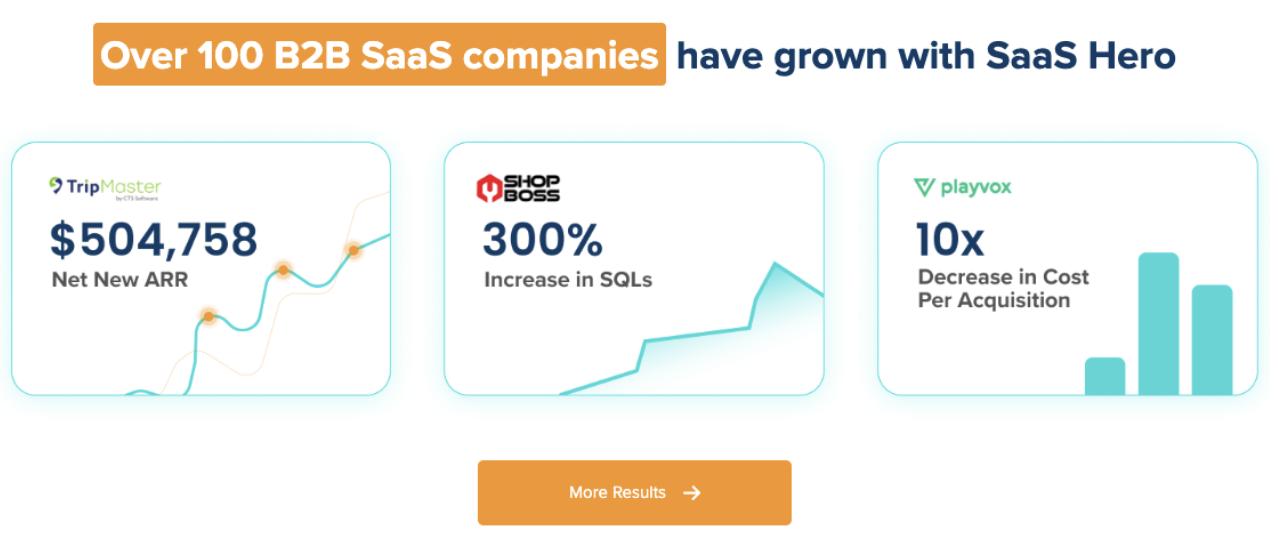
Case Study Example: A transportation SaaS client generated $504,758 in Net New ARR from paid channels by focusing on SQL quality instead of lead count. Their team connected conversion data to the CRM, identified which leads became customers, and optimized campaigns toward those high-value segments.

Attribution Setup: Use 7-day view and 30-day click windows with UTM tracking and CRM integration to support multi-touch attribution across long B2B journeys.
Step 7: Scale Winners with Structured Testing
Scaling works best when you increase spend on proven combinations and keep testing new ideas in a controlled way.
Scaling Framework:
- Budget rules: Raise budgets 20–30% per week on winning ad sets
- Creative velocity: Launch 2–4 fresh creative variations every month
- Audience expansion: Test lookalike audiences at 1%, 2%, and 5%
- Geographic testing: Enter new markets using messaging that already performs
Testing Priorities:
- Creative formats: Compare video, carousel, and single image
- Messaging angles: Test problem-focused against solution-focused copy
- Audience layers: Experiment with interest combinations and lookalike sources
- Placement optimization: Compare Feed, Stories, and Reels performance
The goal is to hold your target CAC while you increase volume. Creative diversity reduces CPA by about 32% when you pair it with broad targeting.
Measuring Revenue Impact from Facebook Ads
Real success in B2B Facebook advertising comes from tracking business outcomes, not only platform metrics. Focus on these KPIs.
Primary Metrics:
- SQL conversion rate: Share of leads that become sales-qualified
- CAC payback period: Time to recover acquisition cost, with a target under 80 days
- Pipeline value: Total potential revenue from Facebook-sourced leads
- Net New ARR: Closed revenue directly tied to Facebook campaigns
Troubleshooting Low ROAS:
- Refine ICP targeting: Identify which job titles and company sizes convert best
- Improve lead qualification: Add smart qualifying questions to lead forms
- Increase follow-up speed: Contact new leads within five minutes of submission
- Boost landing page conversion: A/B test headlines, forms, and CTAs
SaaSHero’s revenue-focused dashboards connect ad performance to CRM data so you can see which campaigns drive real growth instead of vanity metrics.

Advanced Facebook Strategies for B2B SaaS
After you master the fundamentals, advanced tactics can push performance even further.
Competitor Conquesting: Reach users who search for competitor pricing or alternatives and send them to comparison landing pages. This approach works well when your SaaS has clear, provable advantages.
AI-Enhanced Targeting: Use Meta’s GEM AI model, which increases conversions by about 5% on Instagram and 3% on Facebook Feed by learning from both paid and organic content.
Multi-Channel Integration: Combine Facebook with LinkedIn and Google Ads for full-funnel coverage. Facebook handles awareness and retargeting, LinkedIn supports direct prospecting, and Google captures high-intent searches.
If you want these advanced strategies without a long learning curve, upgrade with SaaSHero’s full marketing team for expert execution across channels.
Summary and Action Plan for B2B Facebook Growth
Winning B2B SaaS results from Facebook Ads in 2026 requires alignment with Meta’s AI-driven changes and a strict focus on revenue. The 7-step framework, from ICP definition through structured scaling, gives you a repeatable system for generating SQLs and measurable ARR.
Your Next Steps:
- Audit your current Facebook Ads account against this framework
- Set up accurate attribution between Facebook and your CRM
- Launch creative-first campaigns using Advantage+ targeting
- Build behavioral retargeting sequences that match long B2B sales cycles
To turn Facebook into a reliable revenue channel, book a discovery call and align the strategy with your specific B2B SaaS growth goals.
Frequently Asked Questions
How long does it take to set up effective B2B Facebook Ads campaigns?
Initial setup usually takes about one week, including audience research, creative production, and tracking. Profitability often arrives within 2–4 weeks as Facebook learns your ideal customer patterns. Start with strong, creative, and accurate attribution from day one, then give the AI enough time and data to refine delivery.
Can Facebook Ads scale effectively for B2B SaaS companies spending $50k or more monthly?
Facebook Ads can scale well at higher budgets when managed with discipline. The platform’s reach supports large spends, but success depends on structured creative testing, lookalike expansion, and geographic growth. SaaSHero offers tiered retainers for accounts spending $50k or more, with dedicated management and strategy for scaling.
How do I fix low ROAS from my current Facebook Ads campaigns?
Low ROAS often comes from weak targeting or the wrong optimization metrics. Start by checking which leads convert in your CRM, then build lookalikes from those customers. Implement 7-day view and 30-day click attribution, and shift focus from lead count to SQL quality. A full account audit can reveal specific fixes based on your niche and sales cycle.
What makes Facebook Ads different from LinkedIn Ads for B2B SaaS marketing?
Facebook Ads excel at awareness, retargeting, and reaching decision-makers in a casual browsing environment. LinkedIn users arrive in a professional mindset, while Facebook requires scroll-stopping, problem-focused messaging. Facebook’s strengths include massive reach, advanced retargeting, and lower cost per impression, which support long B2B nurture sequences.
How do Meta’s 2026 algorithm changes affect B2B targeting strategies?
Meta’s 2026 Andromeda algorithm and GEM AI model favor creative-first targeting over narrow manual audiences. Broad targeting with strong creative now often beats tight interest targeting. The system analyzes creative and behavior in real time and routes delivery to users most likely to convert. B2B marketers should prioritize creative variety, mobile-first formats like Reels, and Advantage+ automation supported by quality seed audiences.